Jim’s Intro to One-Touch Pass
Hi folks, Jim here, the only commentator who once tried a one-touch pass and was unexpectedly scouted for a seniors figure skating tournament.
What is a one-touch pass?
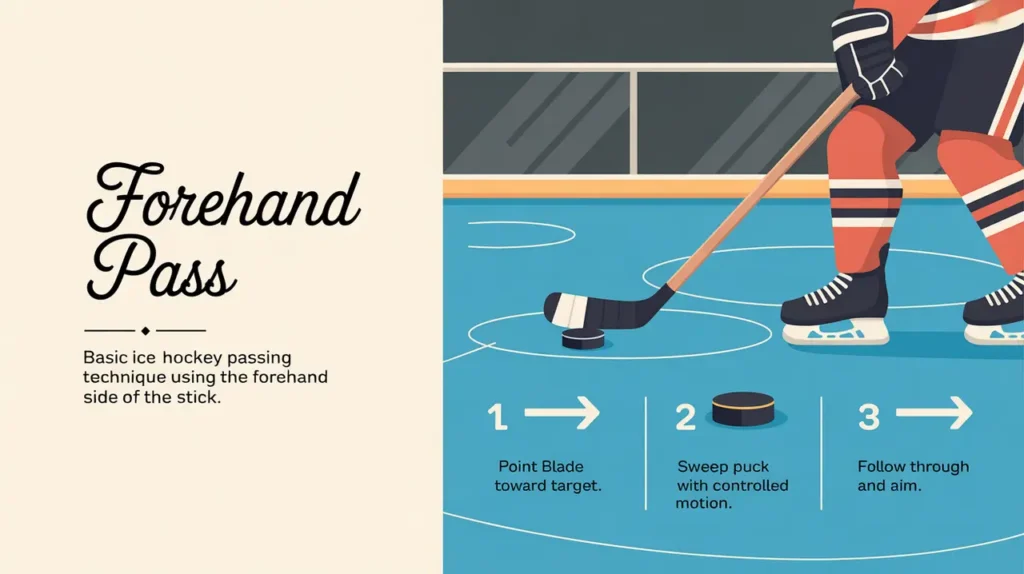
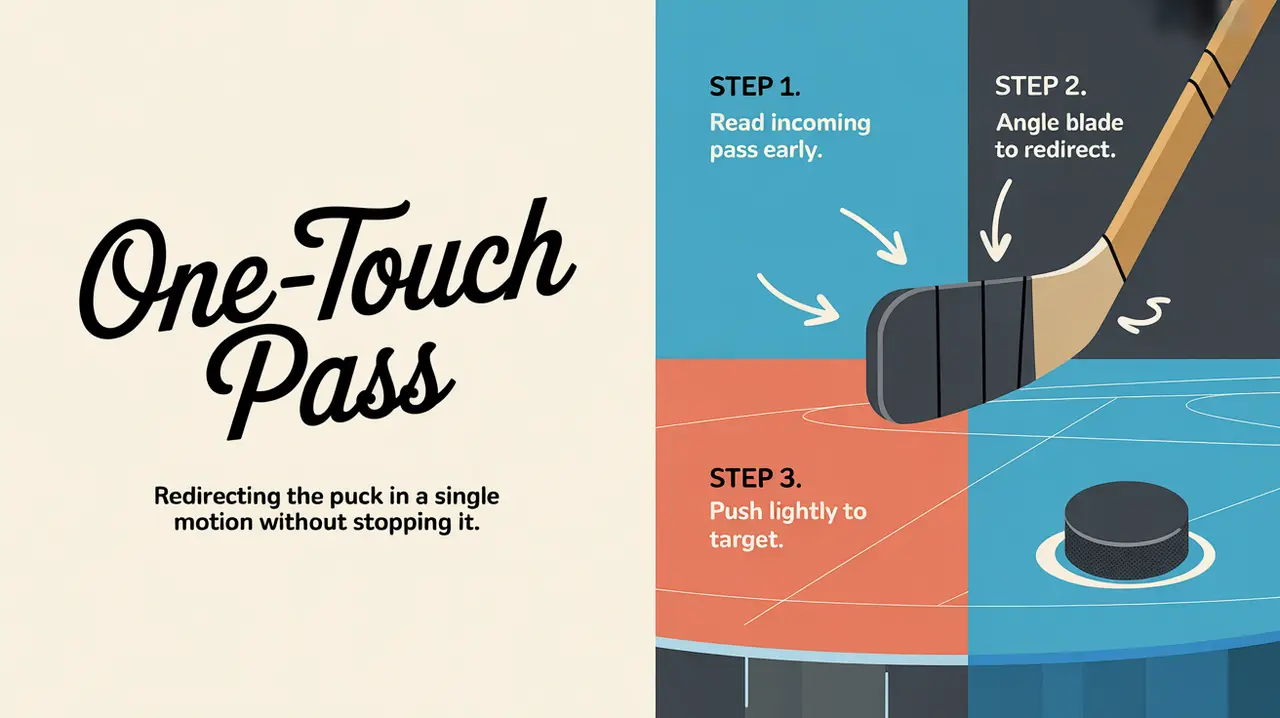
A one-touch pass is when a player redirects the puck to a teammate in a single motion without controlling it first. It’s a quick, fluid technique that speeds up puck movement, creates surprise opportunities, and keeps defenders from resetting.
How does it work?
The one-touch pass depends on timing, positioning, and soft hands:
- Ready Position: Keep your stick on the ice and body square to the puck.
- Anticipation: Read where the puck is coming from and where it needs to go.
- Blade Angle: Slightly open or close the blade depending on the desired direction and speed.
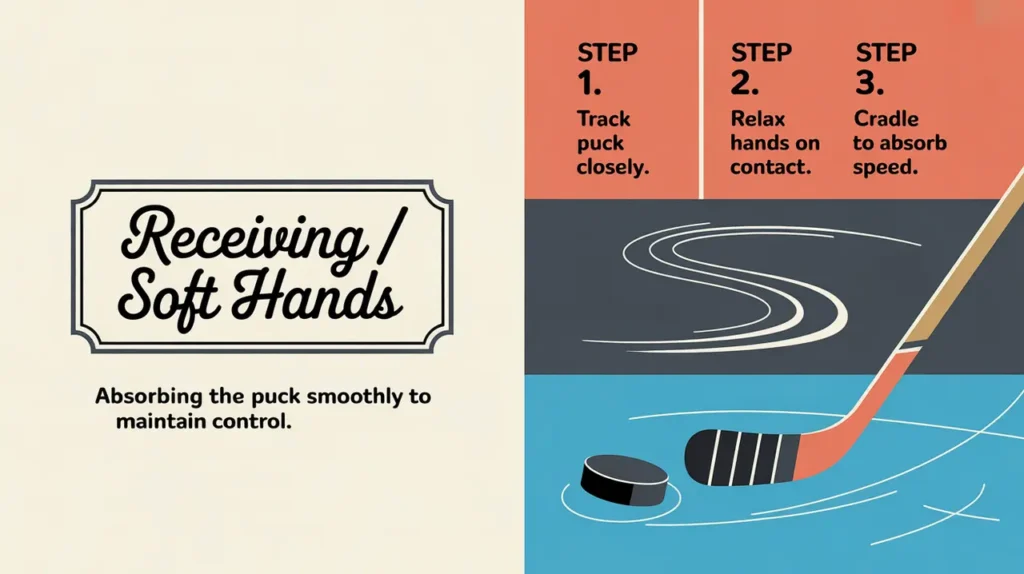
- Soft Touch: Absorb some of the puck’s momentum while redirecting it smoothly.
- Minimal Motion: No big swings, just a controlled deflection or push.
- Communication: Teammates often call for these plays, so quick awareness matters.
How do you make good decisions with it?
- Know Your Target: Be sure of where your teammate is before the puck arrives.
- Use It to Beat Pressure: One-touch passes are great for breaking traps or cycling quickly.
- Pick Clean Lanes: A one-touch into traffic usually leads to turnovers.
- Time It Right: Pass too early or too late and the flow breaks down.
- Keep It Simple: The beauty of one-touches is in their speed and precision, not flash.
How do you master it?
Mastering one-touch passing takes timing drills and quick-reaction practice. Players work on receiving and redirecting pucks from different angles, gradually increasing speed. Area games and give-and-go drills build the instinct to use it naturally.
What does it look like when done right?
A great one-touch pass looks instant and seamless. The puck arrives, changes direction in a blink, and hits the next stick in stride. Defenders barely have time to react before the next play develops.
Commentator’s Corner
Jim’s Take
A slick one-touch pass is like a hot potato with purpose. Defenders think they’re closing in, then boom. The puck’s already somewhere else.
Parent Tip
Encourage players to work on quick passing with minimal wind-up. Reaction speed is just as important as mechanics.
Player Tip
Keep your stick on the ice, stay alert, and trust your touch. The less you fight the puck, the cleaner the redirect.
A Final Thought
The one-touch pass is all about speed and surprise. Master it, and you’ll turn tight plays into open chances before the other team even realizes what happened.