Jim’s Intro to Bank Pass
Hi folks, Jim here, the only commentator who once tried a bank pass and was told to find another financial institution to handle my accounts.
What is a bank pass?
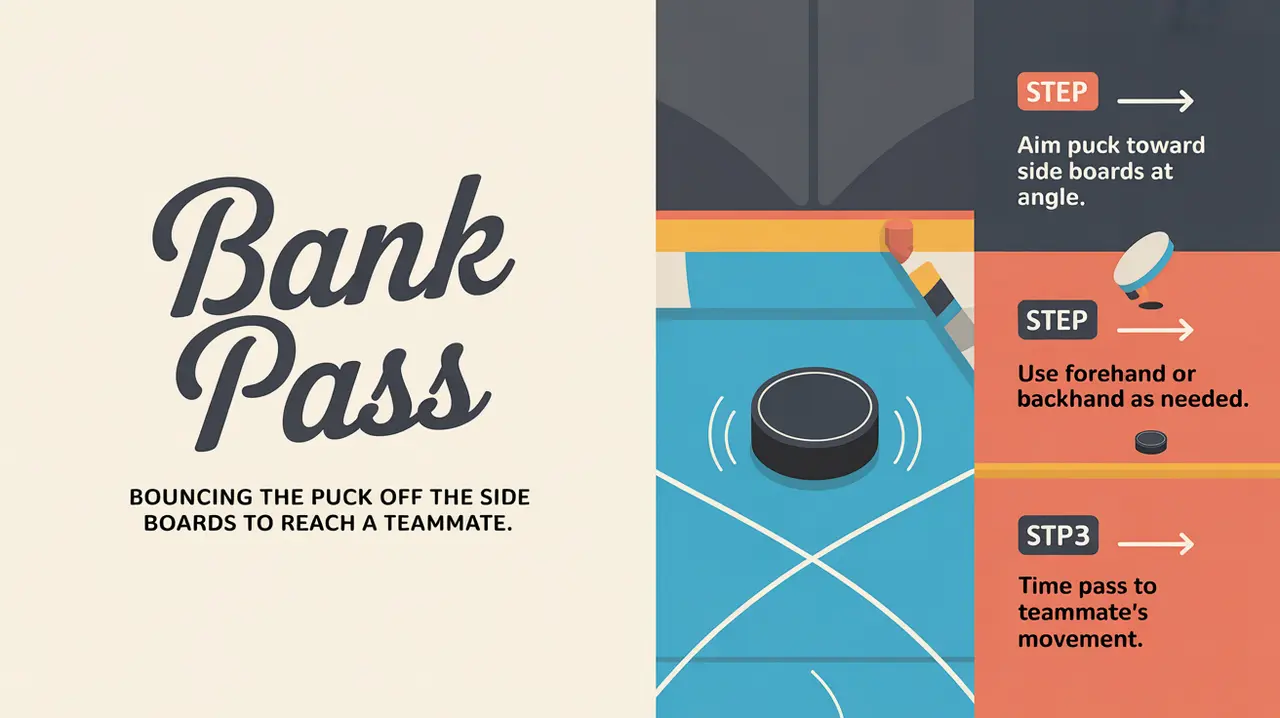
A bank pass is when a player intentionally bounces the puck off the boards to pass to a teammate, often to navigate around defenders or tight spaces. It’s a strategic tool that turns the rink’s edges into passing lanes.
How does it work?
The bank pass relies on angle, touch, and awareness:
- Board Angle: Aim the puck at the boards at a slight angle to direct it where your teammate will be.
- Puck Speed: Harder passes bounce farther and faster, while softer passes die quickly.
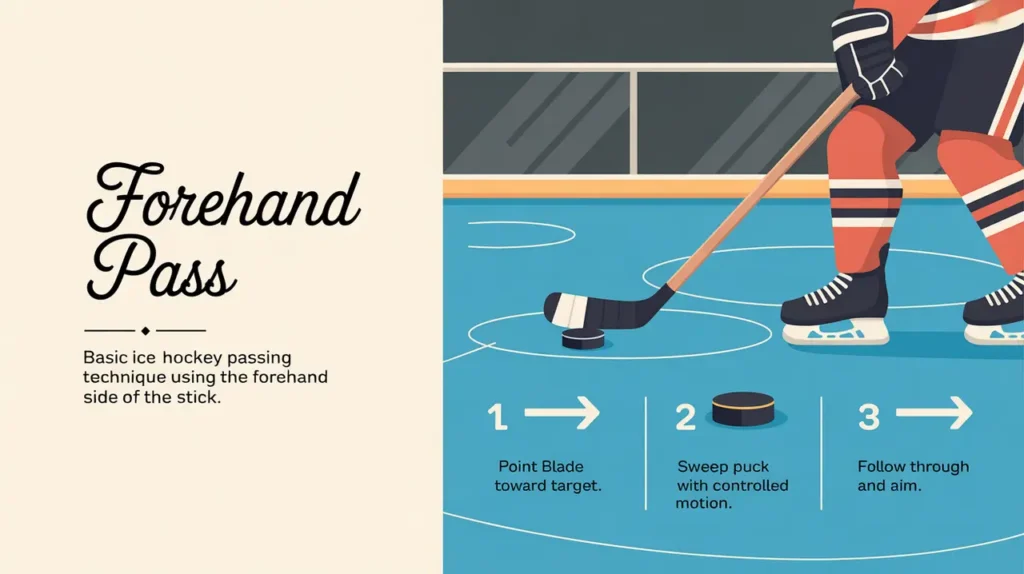
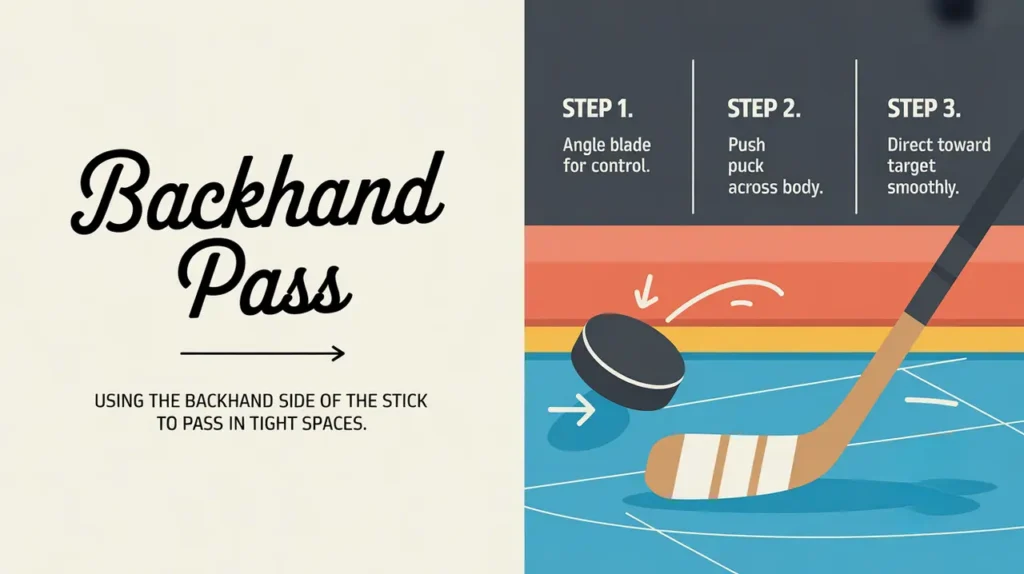
- Blade Control: Use a smooth forehand or backhand motion to guide the puck into the boards.
- Anticipation: Teammates need to read the bounce and adjust their position.
- Quick Execution: The pass must be crisp to avoid interceptions or awkward bounces.
- Head Up: Always scan the ice before using the boards. Banking blindly leads to giveaways.
How do you make good decisions with it?
- Use It to Beat Pressure: Bank passes are great for getting around defenders clogging direct lanes.
- Choose Clean Sections of Boards: Damaged or uneven boards can create unpredictable bounces.
- Read Teammate Positioning: Make sure your teammate is ready to receive the rebound.
- Don’t Force It: If the angle or timing isn’t right, regroup rather than risk a turnover.
- Mix It In Strategically: Overusing bank passes makes them predictable.
How do you master it?
Mastering the bank pass requires practice with different angles and speeds. Players run drills bouncing passes off the boards to set up teammates in motion. Learning how different rinks’ boards react is part of the craft. No two rinks are identical.
What does it look like when done right?
A perfect bank pass looks deliberate and smooth, with the puck hitting the boards and rebounding directly onto a teammate’s stick in stride, leaving defenders chasing shadows.
Commentator’s Corner
Jim’s Take
A smart bank pass is like calling in an assist from the boards. When timed right, it’s poetry in motion.
Parent Tip
Encourage players to think of the boards as part of the game, not just boundaries. Creative passing grows from this mindset.
Player Tip
Experiment with different angles and speeds in practice. Learning how the boards respond will give you an extra set of passing options.
A Final Thought
The bank pass turns the rink itself into a teammate. Master it, and you’ll open up new lanes, outthink defenders, and keep plays alive in ways straight passes can’t.