Jim’s Intro to the Hockey Stick
Hi folks, Jim here, the only commentator who tapes his coffee mug before every broadcast. Today we’re talking about the hockey stick. Without it, this game would just be a cardio session on ice.
What is the hockey stick?
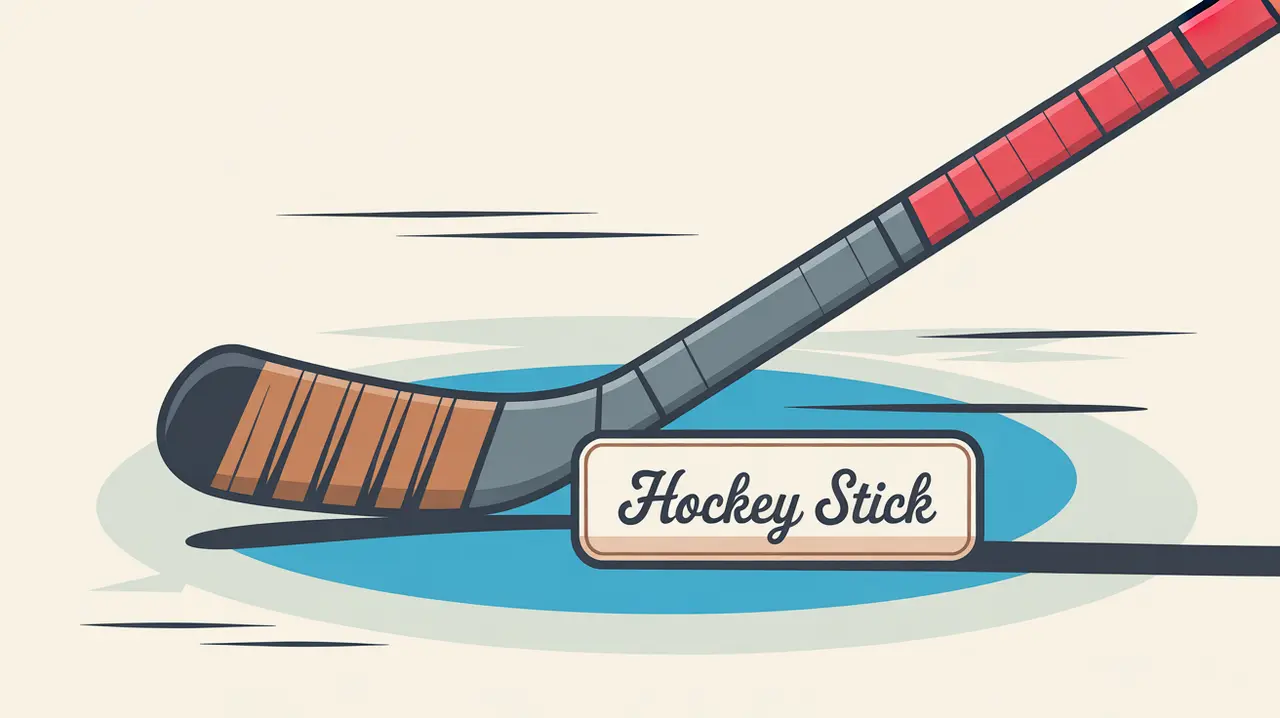
The hockey stick is the most versatile piece of equipment a player has. It’s made from classic wood or modern composite materials that can cost a few hundred dollars. Players use it to control the puck, deliver passes, and unleash powerful shots. It’s also a key defensive tool, breaking up plays through poke checks, stick lifts, and lane control. It acts like a rudder for the skater, helping with turns, balance, and stability at high speeds. It can even help players stop and recover when things get messy. Without the stick, we’d all just be skating in circles trying to kick the puck. I don’t know about you, but I’d fall over every time.
How does it work?
The stick has five main parts that work together.
- Blade: Cradles and guides the puck.
- Shaft: Provides reach and leverage for passing, poking, and shooting.
- Flex: Stores and releases energy during shots.
- Curve: Shapes puck lift and spin.
- Lie: Affects blade contact with the ice and influences control.
When a player understands these elements, the stick stops feeling like equipment and starts acting like part of their body.
How do you make good decisions with it?
Choosing the right stick depends on fit, playing style, and comfort.
- Length: Chin to nose on skates is a solid guide. Shorter sticks favor puck control. Longer sticks increase reach.
- Flex: Start with a flex rating about half the player’s weight for balanced performance.
- Curve Pattern: Moderate curves support better puck control and shooting accuracy.
- Material: Wood is affordable with great feel. Composite is lighter and more powerful but pricier.
- Lie: The correct lie keeps the blade flat for cleaner passes and shots.
How do you master it?
Players develop stick mastery in stages. They begin with basic grip and puck control. Over time they learn how flex and curve work in passing and shooting. With experience, they adjust tape jobs, patterns, and flex ratings until the stick feels natural. When that happens, it becomes less a tool and more an extension of instinct.
What does it look like when done right?
A mastered stick disappears into the player’s movement. Passes glide effortlessly, shots explode off the blade, and defensive plays happen with precision. It’s smooth, fast, and controlled, and everyone in the rink can see the difference.
Commentator’s Corner
Jim’s Take
I’ve seen players with perfect skating and sharp instincts turn into chaos machines the second they grab a stick that’s the wrong size. It’s like watching a giraffe try to use a toothbrush.
Parent Tip
Check stick length with the player on skates. Aim for chin to nose. Match flex to about half their weight, and stick with a moderate curve until skills develop.
Player Tip
Spend a few minutes each practice just feeling the puck on the blade. No drills, no pressure. It builds soft hands fast.
A Final Thought
The hockey stick is the co-pilot of every great play. Tape it, trust it, and learn its quirks. In the hands of a good player, a hockey stick controls the ice like a paintbrush does a canvas.