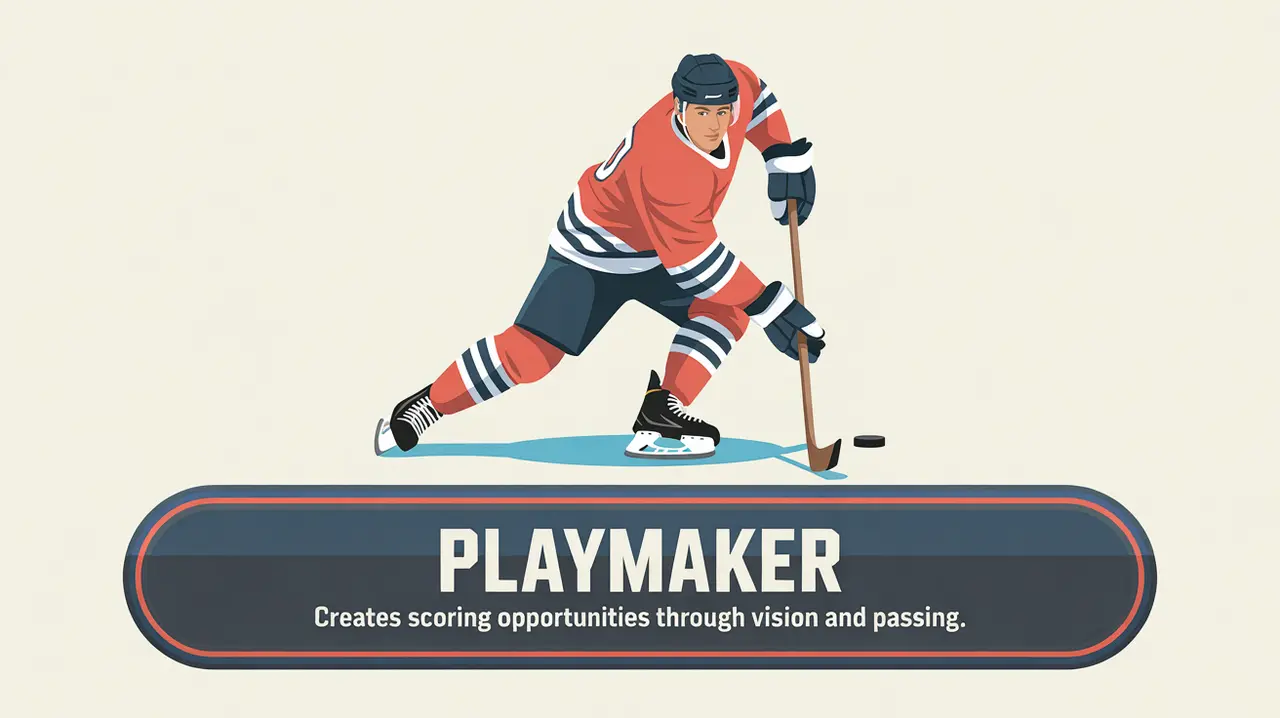
Jim’s Intro to the Playmaker
Hi folks, Jim here, the only commentator who once tried to make a no-look pass in a charity game and completely missed the puck. It turns out I’m the one who needed a fresh donation of talent.
What is a playmaker?
A playmaker is a player whose primary skill is creating scoring opportunities for teammates through elite vision, passing, and anticipation. They read defenses like a chessboard, see lanes before they open, and make plays that transform ordinary possessions into dangerous chances.
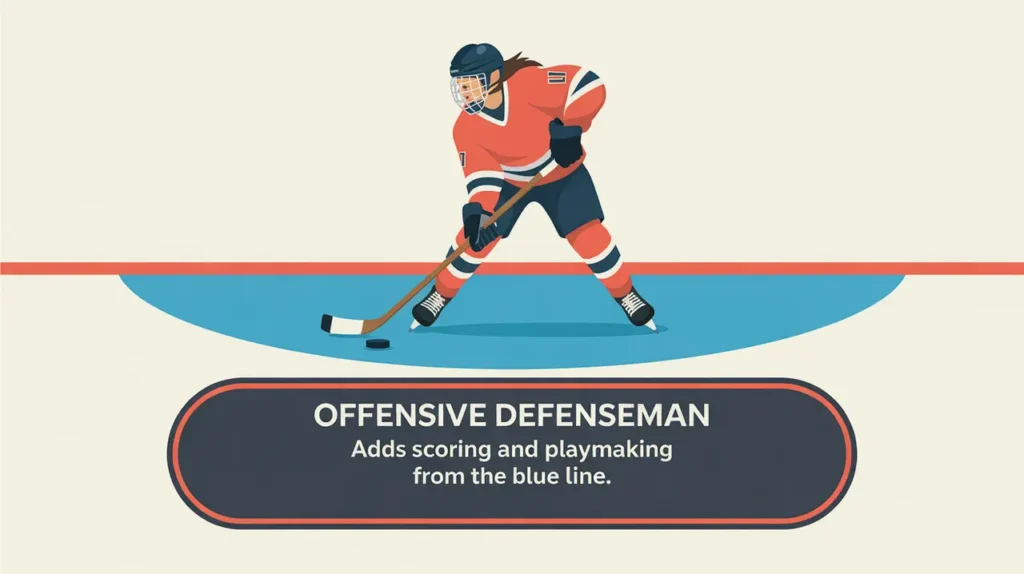
Playmakers can be centers, wingers, or even defensemen, but their defining trait is their ability to orchestrate the attack, often making the pass before the pass or the perfect setup that leads directly to a goal.
How does it work?
Playmakers influence every offensive phase with awareness, timing, and precision:
- Reading the Ice
- They constantly scan, tracking both defenders and teammates.
- They spot seams early, anticipating how defenders will move before making their play.
- Puck Distribution
- Playmakers excel at quick, accurate passes that exploit gaps in coverage.
- They use deceptive movements, like shoulder fakes, no-look passes, delays, to overcome defenders.
- Tempo Control
- They dictate the speed of a possession, slowing it down to draw defenders or accelerating to catch them off-balance.
- Their ability to “hold” the puck until the perfect moment often opens up high-danger scoring chances.
- Support and Positioning
- Off the puck, they find spaces that give teammates clean passing options.
- They often work in the half-wall or high slot to maintain vision and distribute effectively.
- Special Teams Impact
- On power plays, playmakers are typically the quarterback on the half wall or point, controlling the flow of passes and setting up shooters.
Common Situations Involving Playmakers
- Power Plays: Orchestrating puck movement and finding cross-seam passes.
- Odd-Man Rushes: Drawing defenders to create tap-in chances for teammates.
- Cycling in the Offensive Zone: Holding the puck until seams open.
- Backdoor Plays: Spotting and threading passes through crowded areas.
- Behind-the-Net Setups: Using Gretzky’s Office to feed the slot.
How do you make good decisions with it?
Good playmakers rely on patience, precision, and timing.
- Look Early, Pass Late: Read options quickly, then wait for the exact right moment.
- Manipulate Defenders: Use your body and eyes to create lanes, not just react to them.
- Know Your Teammates: Anticipate their tendencies; where they like the puck, their timing, their shooting side.
- Avoid Overpassing: Sometimes the best play is the shot. Forcing passes kills opportunities.
- Protect the Puck: You can’t make plays if you’re coughing it up under pressure.
How do you master it?
Mastering the playmaker role requires exceptional vision, hockey IQ, and technical passing skill. The best spend countless hours refining their hands, deception, and spatial awareness. They study opponents to recognize patterns, and they develop the confidence to hold the puck under pressure until the exact moment the play opens up.
What does it look like when done right?
A great playmaker looks like they’re two seconds ahead of everyone else. They glide through the offensive zone, draw two defenders, and slip a perfect no-look feed to a teammate for a backdoor goal. On the power play, they calmly scan, freeze the PK box with a shoulder fake, and thread a pass through traffic that ends in a one-timer under the bar.
Commentator’s Corner
Jim’s Take
A true playmaker can make a rink full of players dance to their rhythm like a choreographer.
Parent Tip
If your player has playmaker instincts, nurture both creativity and fundamentals. The best vision in the world still needs precise execution.
Player Tip
Be patient with the puck and trust your reads. The great playmakers aren’t flashy for the sake of it. They make the right play at the right time, over and over again.
A Final Thought
Playmakers are the creative engines of hockey. Their vision turns chaos into opportunity, and their passes often define the moments fans remember most. When mastered, the role blends intelligence, timing, and artistry into one of the most thrilling styles of play.