Jim’s Intro to the Enforcer
Hi folks, Jim here, the only commentator who makes people laugh uncontrollably whenever i tell them that I’m the enforcer on my recreational league team.
What is an enforcer?
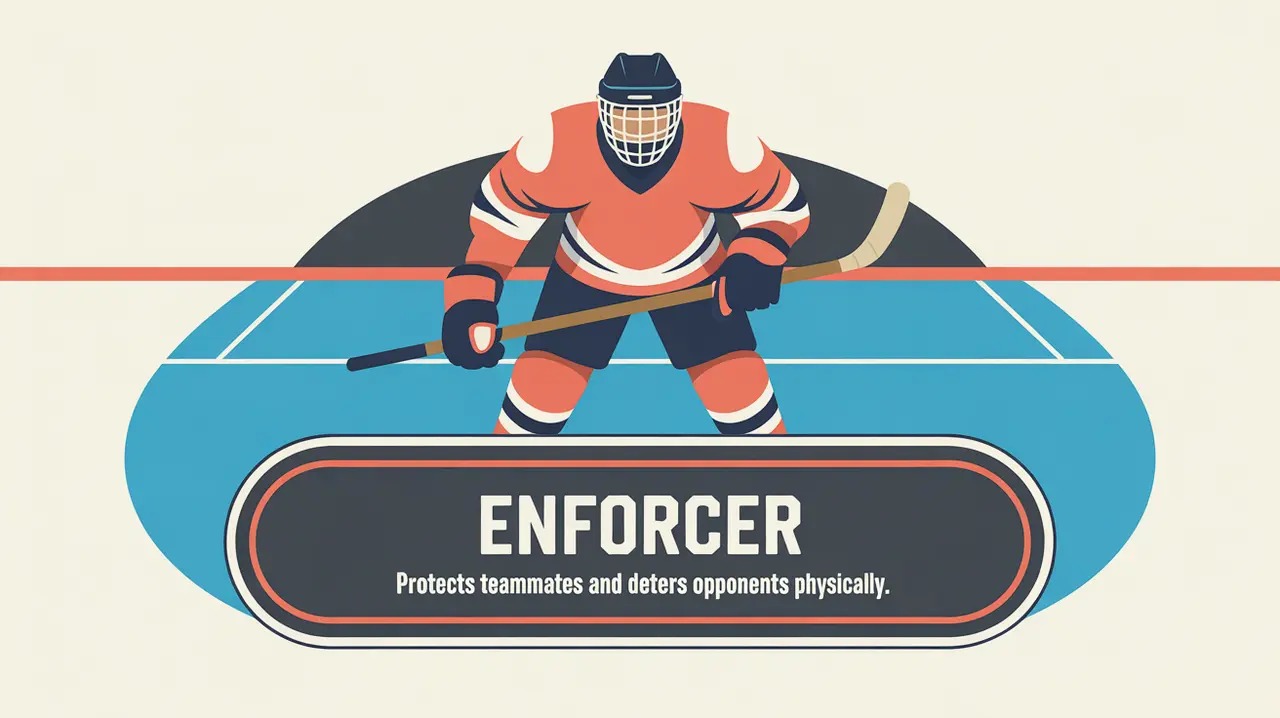
An enforcer is a player whose primary role is to protect teammates, deter opponents through physical presence, and respond when things get rough. They’re the players who make opponents think twice before throwing a dirty hit or taking liberties with skilled players.
While the role has evolved over time, the enforcer has traditionally been the team’s physical guardian, willing to fight, hit, and stand up for their teammates. Modern enforcers may contribute more to forechecking, energy shifts, and defensive pressure, but their defining trait remains intimidation and protection.
How does it work?
Enforcers impact the game through physical dominance, psychological pressure, and team security:
Physical Deterrence
- Enforcers use their size and toughness to discourage cheap shots and intimidation tactics from the opposing team.
- A big open-ice hit or a well-timed stare-down can change the tone of a game.
Enforcing the Code
- When a teammate is targeted, enforcers step in to hold opponents accountable, often through fights or physical confrontations.
- This unwritten “code” has long been part of hockey culture, especially at higher competitive levels.
Energy and Momentum Shifts
- A spirited fight or crushing hit from an enforcer can ignite the bench and the crowd, shifting momentum in ways stats don’t always capture.
Protecting Star Players
- Enforcers create space for skill players by making opponents wary of retaliation if they get too aggressive.
- Even their presence on the bench can make a difference in how opponents play.
Modern Role Adaptations
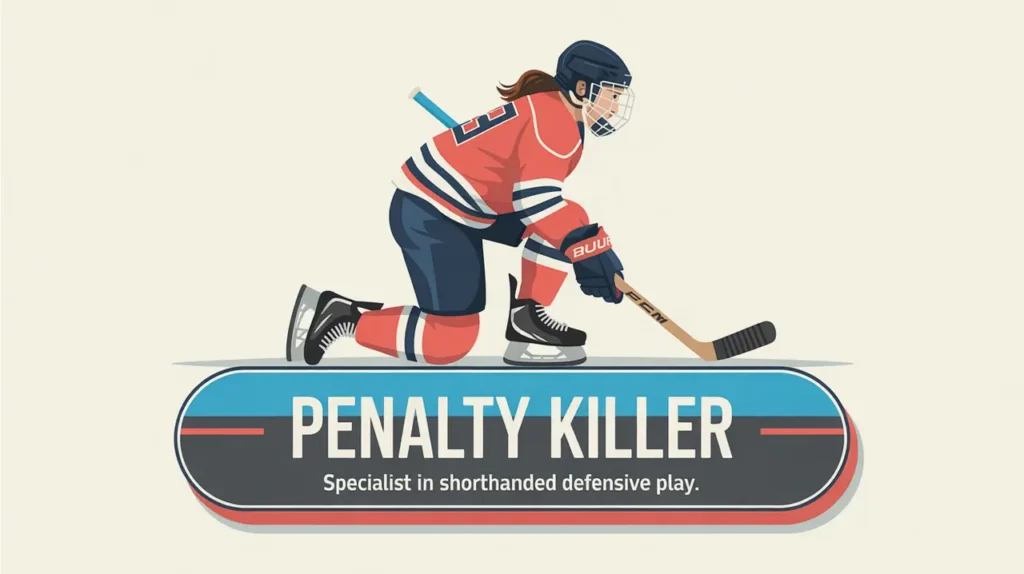
- As pure fighting has declined in many leagues, modern enforcers often contribute as high-energy fourth liners, strong forecheckers, and penalty killers, using physical play within the rules to influence the game.
Common Situations Involving Enforcers
- Responding to Dirty Hits: Dropping the gloves to defend a teammate.
- Momentum Shifts: Delivering a hit or scrap to wake up a flat team.
- Net-Front Scrums: Clearing opponents out of the crease.
- Physical Series: Setting a tone early to dictate how tough the game will be.
- Psychological Presence: Simply being on the ice changes how opponents approach matchups.
How do you make good decisions with it?
Good enforcers rely on timing, judgment, and restraint, not just brute force.
- Pick Your Spots: Every hit or fight has consequences. Make it count.
- Protect, Don’t Distract: Your role is to support the team, not take unnecessary penalties.
- Read the Room: Know when physical action lifts your team versus when it risks momentum.
- Stay Disciplined: Controlled aggression wins respect. Reckless aggression hurts the team.
- Communicate: A look, a word, or a tap can defuse situations without escalating to fights.
How do you master it?
Mastering the enforcer role takes strength, balance, situational awareness, and leadership through presence. The best enforcers train to control their physical power, fight effectively when needed, and skate well enough to keep up in modern systems. Many also develop strong locker room leadership skills, becoming tone-setters and protectors in more ways than one.
What does it look like when done right?
A great enforcer sees a dangerous hit on a star player, calmly skates over, and makes it clear that won’t fly, whether with a few words or a clean, hard response. They deliver a massive hit on the forecheck that swings momentum, then play their shift smartly without putting the team shorthanded. Their presence makes opponents think twice all night.
Commentator’s Corner
Jim’s Take
A true enforcer doesn’t just swing fists. They control the emotional temperature of the game. They’re part shield, part spark plug.
Parent Tip
If your player gravitates toward this role, teach them discipline and responsibility along with toughness. Smart physical players are far more valuable than reckless ones.
Player Tip
Use your presence wisely. Hit hard, stand up when needed, and play within the game. Respect comes from impact and control, not chaos.
A Final Thought
Enforcers embody hockey’s gritty edge. When done well, the role is about protection, momentum, and presence, not just fighting. They give their team backbone, set the tone, and make sure every opponent knows: actions have consequences.