Jim’s Intro to the Utility Player
Hi folks, Jim here, the only commentator who once subbed in on defense mid-game, forgot which end I was covering, and nearly screened my own goalie.
What is a utility player?
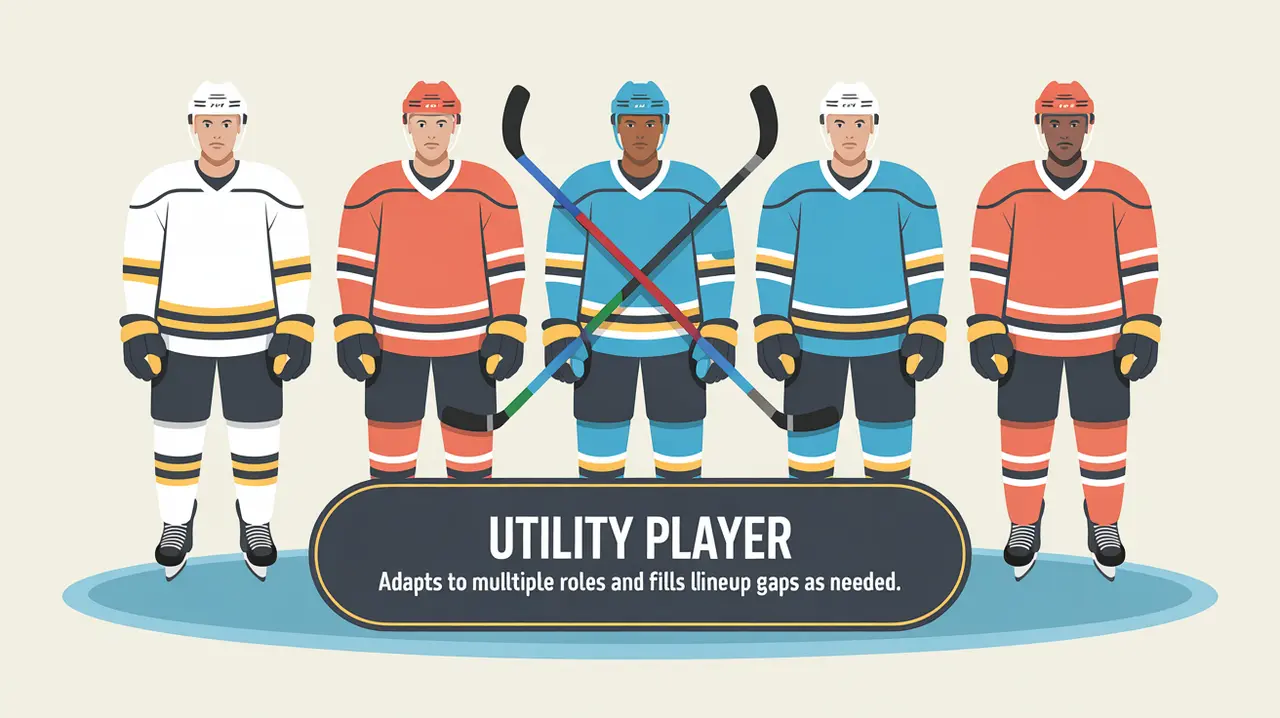
A utility player is someone who can fill multiple roles and positions reliably, adapting to the team’s needs on any given night. They might play wing one game, center the next, and kill penalties or join the power play when required. They don’t always lead in points, but they keep teams flexible and stable, especially through injuries, lineup changes, or tactical adjustments.
Utility players are the coaches’ secret weapon. Their versatility allows teams to solve problems without overhauling the lineup.
How does it work?
Utility players influence the game through adaptability, hockey IQ, and balanced skill sets:
Positional Flexibility
- Utility players are comfortable playing multiple forward positions and, in some cases, defense.
- They understand different responsibilities in each role, from forechecking angles to breakout patterns.
Situational Awareness
- They adjust their style depending on what’s needed: shutting down top lines one night, driving offense the next.
- Their ability to read the game allows them to fit seamlessly into different line combinations.
Special Teams Contributions
- Many utility players penalty kill and play on the power play, switching responsibilities fluidly.
- They’re trusted in both defensive and offensive situations because they make smart decisions.
Lineup Stability
- When injuries or penalties occur, utility players are often the first to move up or down the lineup, keeping lines functioning without losing structure.
Glue Factor
- Beyond tactics, utility players often stabilize team chemistry, filling gaps that don’t show up on the scoresheet but make systems work smoothly.
Common Situations Involving Utility Players
- Injury Replacements: Sliding into a new role seamlessly without missing a beat.
- Special Teams Adjustments: Taking shifts on both PK and PP units.
- Line Shuffling: Moving between checking and scoring lines depending on matchups.
- Game Situations: Taking defensive-zone draws late in one period and jumping on the power play in the next.
- Tournament or Back-to-Back Scenarios: Covering multiple roles to keep the roster balanced.
How do you make good decisions with it?
Great utility players rely on awareness, adaptability, and consistency.
- Know Every Role You Play: Understand responsibilities for each position before stepping into it.
- Play Simple, Smart Hockey: Reliability matters more than flash when filling gaps.
- Anticipate Needs: Read the bench and the game flow to see where you’re needed most.
- Communicate Constantly: Clear talk with linemates smooths transitions between roles.
- Stay Calm Under Shifts: Switching responsibilities mid-game requires mental steadiness.
How do you master it?
Mastering the utility player role takes broad skill development, tactical understanding, and coachability. Players work on skating, passing, and defensive habits that translate across positions. They also study systems deeply so they can slot in anywhere without hesitation. Mental flexibility is just as important as physical skill.
What does it look like when done right?
A great utility player steps in to center a line after an injury, wins key faceoffs, kills a penalty, then joins the power play late to help protect a lead. They’re the player who quietly logs minutes in multiple situations, always in the right place, making the right play, no matter the role.
Commentator’s Corner
Jim’s Take
Utility players are like duct tape. They might not grab the headlines, but when something breaks, they hold everything together.
Parent Tip
If your player fits this mold, celebrate their versatility. Coaches value players who can adapt more than you might think.
Player Tip
Lean into the role. Learn systems deeply, keep your game steady, and be ready for anything. The more positions you can play well, the more indispensable you become.
A Final Thought
Utility players give teams flexibility and resilience. Their ability to adapt, stabilize, and contribute anywhere makes them the quiet backbone of strong lineups. When mastered, this role blends intelligence, reliability, and versatility, turning adaptability into real competitive advantage.