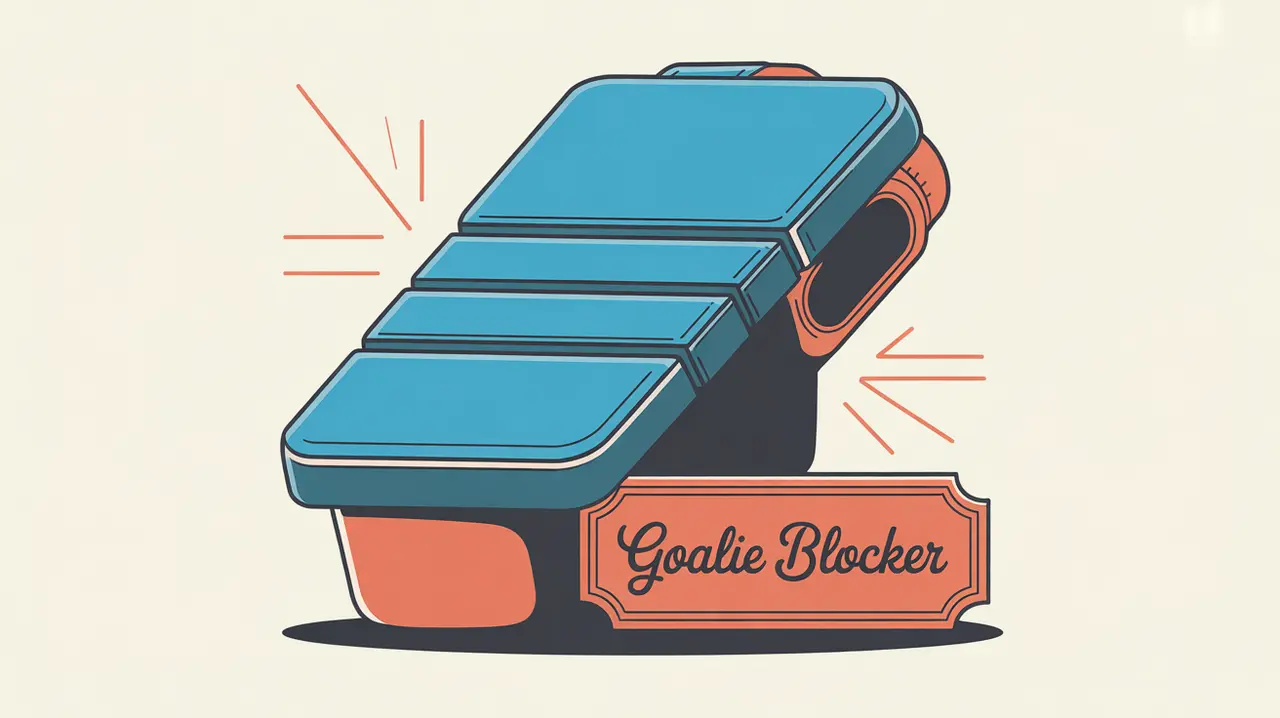
Jim’s Intro to the Blocker
Hi folks, Jim here, the only commentator who once bought a goalie a spam filter subscription when they asked for a blocker.
What is the blocker?
The blocker is the rectangular glove worn on the goalie’s stick hand. It protects the hand and wrist from high-speed shots while giving the goalie a tool to deflect, steer, and sometimes even handle the puck. A good blocker balances protection, mobility, and precision, allowing goalies to punch away shots, direct rebounds, and control the puck like an extra paddle.
How does it work?
The blocker combines a padded board with a glove and wrist system to shield the hand while giving fine control.
- Blocking Board: A firm, rectangular surface that deflects shots away from danger.
- Hand Glove: Built into the back of the board, allowing the hand to grip the stick naturally.
- Sidewall Protection: Shields the thumb, wrist, and stick side from angled shots.
- Cuff and Wrist Strap: Secure the glove for a stable fit while preserving mobility.
- Palm: Reinforced for durability and stick control.
When positioned correctly, the board meets the puck at controlled angles, guiding rebounds where the goalie wants them.
How do you make good decisions with it?
Picking and setting up a blocker is about finding the right fit, balance, and feel.
- Fit: The glove should fit snugly, with the stick grip feeling natural.
- Board Positioning: The blocking surface should align with the back of the hand for consistent angles.
- Protection: Look for reinforced sidewalls and durable palms to handle repeated impacts.
- Weight and Balance: A lighter blocker improves quick reactions. Heavier models absorb more force but can feel sluggish.
- Condition: Inspect for worn palms, loose stitching, or padding breakdown that can expose the hand.
How do you master it?
Goalies master their blocker through repetition and puck control drills. They learn how to angle the board to direct rebounds intentionally, how to punch away high shots with confidence, and how to use the blocker hand fluidly while gripping the stick. Over time, it becomes an extension of their reaction time; fast, precise, and instinctive.
What does it look like when done right?
A goalie with a dialed-in blocker steers pucks with precision. Shots deflect cleanly to the corners. Stick control looks natural. There’s no fumbling, no shifting, and no flinching. The blocker moves like it’s attached to the goalie’s instincts.
Commentator’s Corner
Jim’s Take
I’ve seen goalies swat at pucks like they’re chasing flies because their blocker fit was off. Dial it in, and suddenly every rebound has a purpose.
Parent Tip
Make sure the glove fits properly and the stick grip feels natural. Worn palms and loose straps can compromise control and safety.
Player Tip
Work on controlled deflections in practice. The blocker is for blocking and for steering the play where you want it.
A Final Thought
A good blocker doesn’t just stop pucks. It turns wild shots into controlled rebounds and gives goalies a way to shape the flow of the game. When it fits right, it becomes a quiet weapon in the crease.