Jim’s Intro to Tight Turns
Hi folks, Jim here, the only commentator who once tried a tight turn on new skates and ended up introducing myself to the boards up close and personal.
What are tight turns?
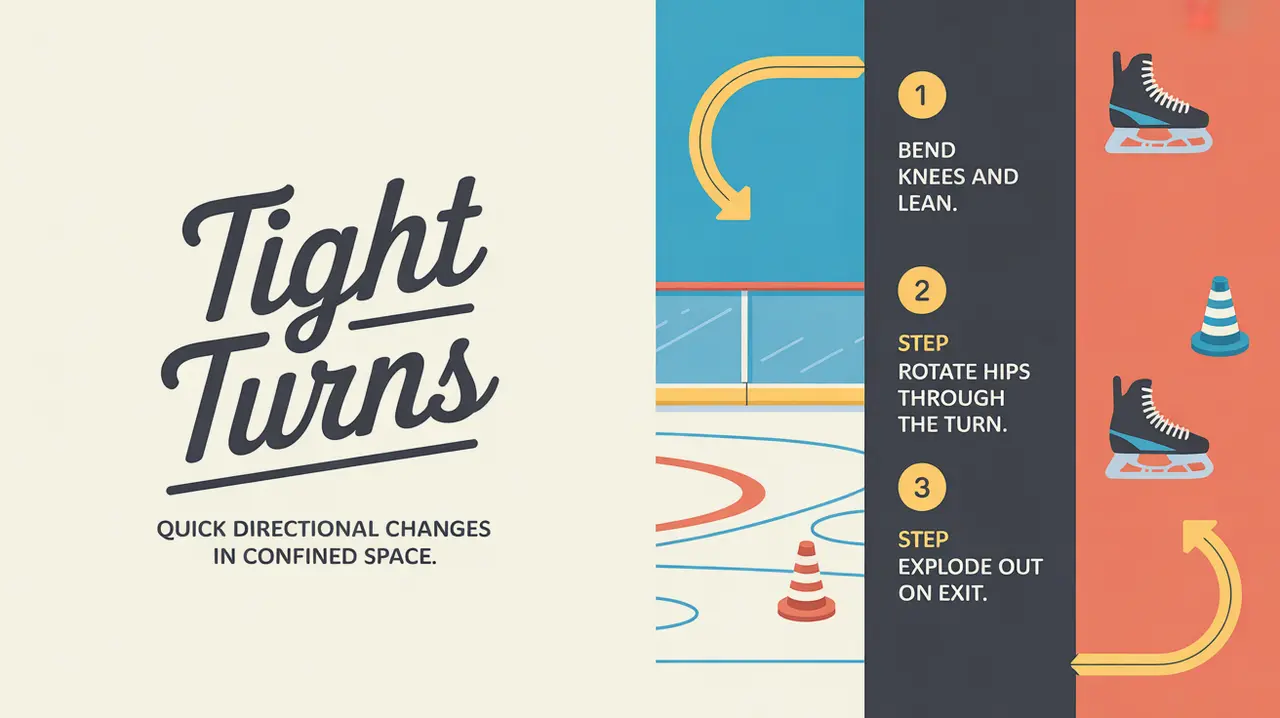
Tight turns are quick, controlled directional changes that use both skates to carve a tight arc, allowing players to evade defenders, maintain puck control, and navigate traffic efficiently. They’re used constantly in game situations to escape pressure, reposition defensively, or keep plays alive along the boards.
How does it work?
Tight turns depend on edge control, body positioning, and smooth weight transfer:
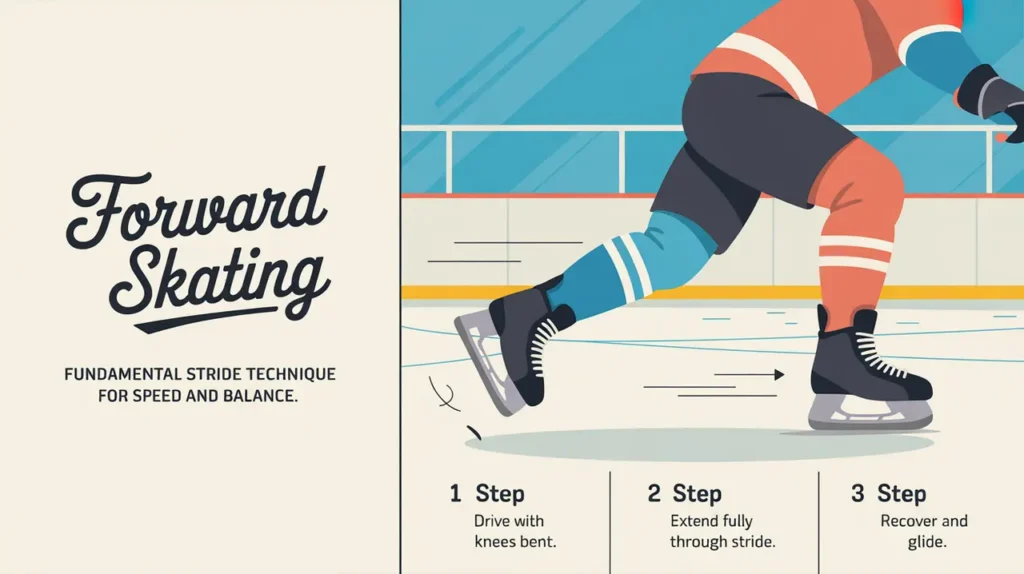
- Athletic Stance: Knees bent, chest up, and weight centered for balance.
- Leading Skate: The inside skate initiates the turn, setting the arc on its inside edge.
- Trailing Skate: The outside skate crosses slightly behind, riding the outside edge to support the carve.
- Knee and Hip Rotation: Both lower and upper body follow the turn to stay aligned.
- Edge Pressure: Strong edge engagement keeps the turn tight without sliding.
- Exit Acceleration: As the turn completes, players push out of it with a few quick strides to regain speed.
How do you make good decisions with it?
- Choose Smart Angles: Use tight turns to escape forecheckers or open new lanes instead of predictable loops.
- Read Pressure: If defenders overcommit, a quick tight turn creates instant separation.
- Control Your Speed: Entering too fast without good edges leads to slips or wide turns.
- Keep Your Head Up: Scan for passing options and space as you turn.
- Blend with Stickhandling: Tight turns combined with puck protection make for dangerous offensive plays.
How do you master it?
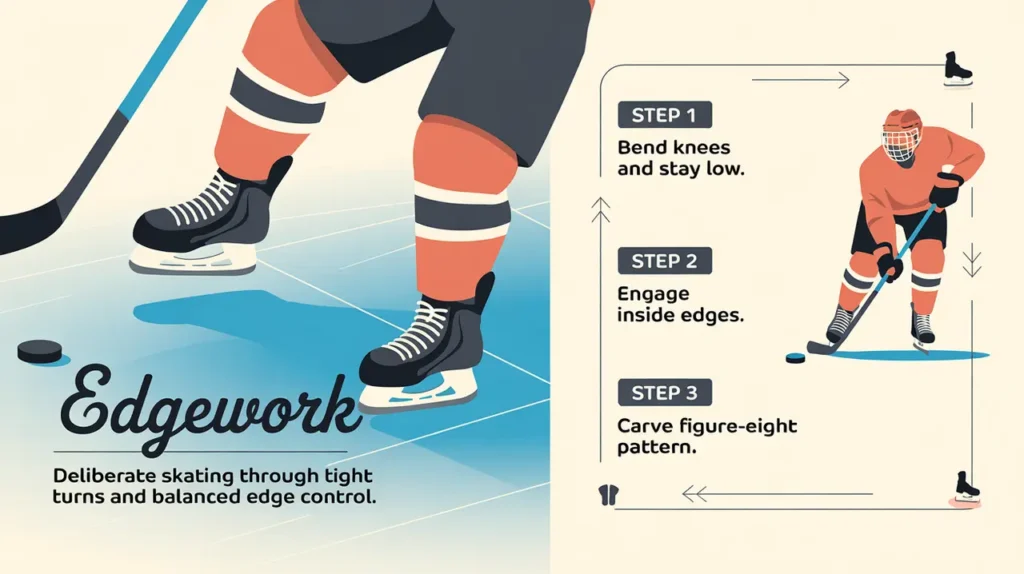
Mastering tight turns requires edge confidence and repetition. Players drill tight turns in both directions, gradually increasing speed. Cones, figure-eight patterns, and board escape drills sharpen control. Practicing with a puck ensures the skill translates to real game pressure.
What does it look like when done right?
Elite tight turns look smooth, controlled, and explosive on the exit. The player carves the ice with precision, keeps the puck secure, and emerges facing the play, often leaving defenders spinning the wrong way.
Commentator’s Corner
Jim’s Take
A perfect tight turn is like a good deke without touching the puck. The defender commits, and suddenly, you’re gone.
Parent Tip
Encourage equal practice in both directions. Players often favor one side, which can limit their effectiveness under pressure.
Player Tip
Bend your knees, trust your edges, and accelerate out of the turn. Speed control going in is just as important as power coming out.
A Final Thought
Tight turns can be a superpower. Master them, and you’ll own the corners, escape checks, and keep plays alive when others would have stalled.