Jim’s Intro to Transitions
Hi folks, Jim here, the only commentator who once tried to show a transition drill and ended up doing what looked more like a three-point turn in a parking lot.
What are transitions?
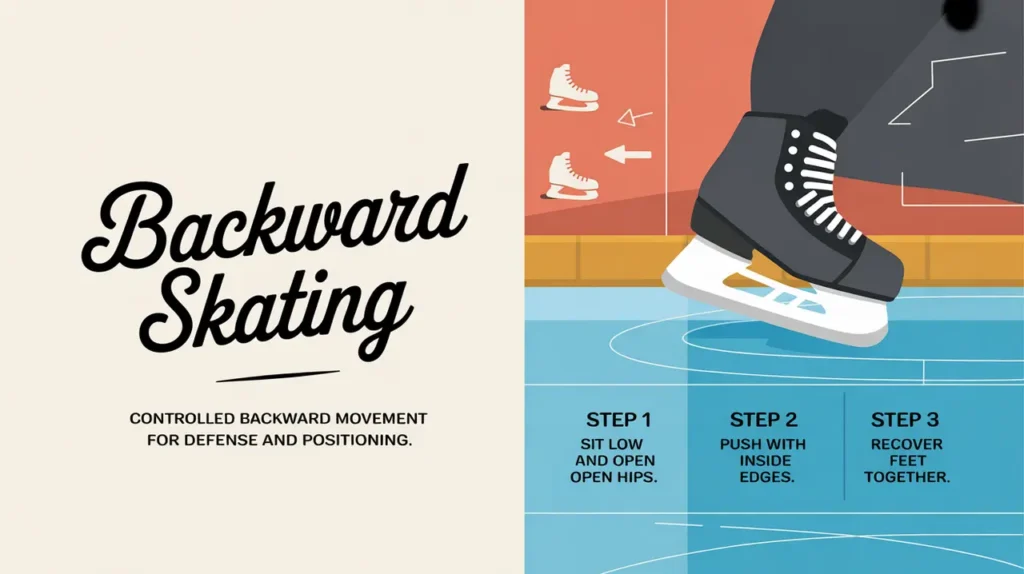
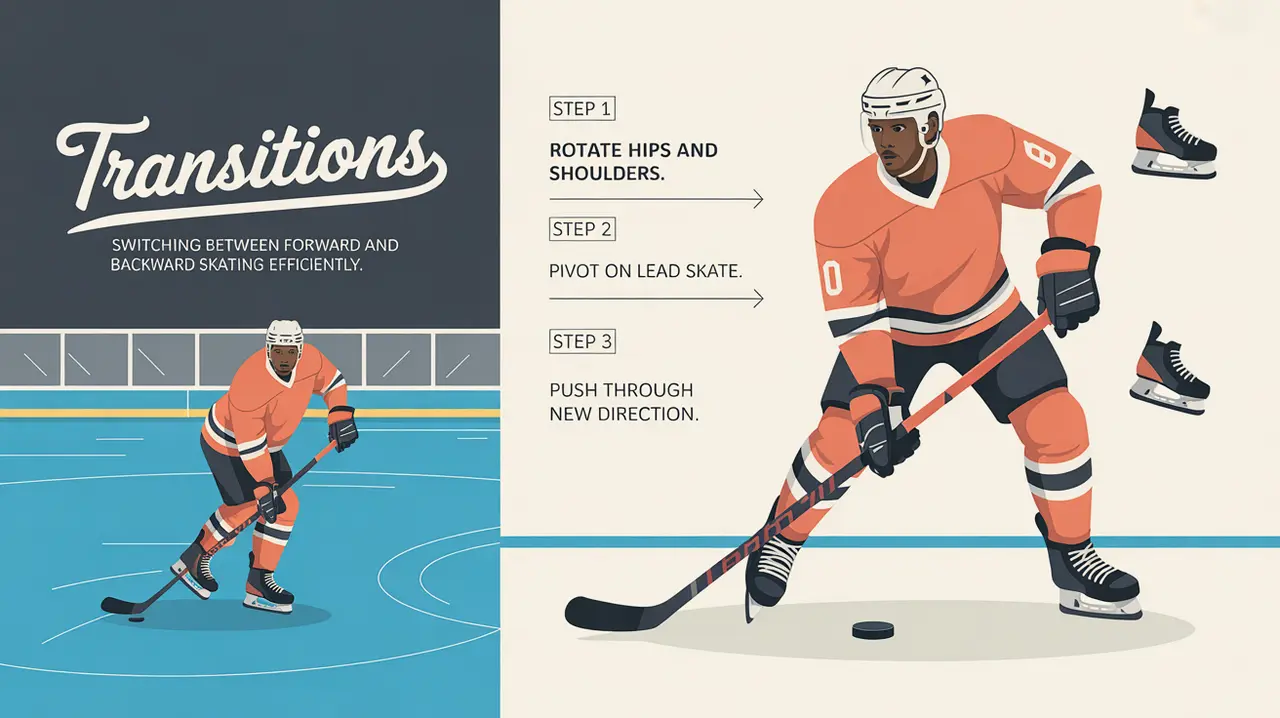
Transitions are the movements that allow players to shift smoothly between forward and backward skating, or change direction quickly while maintaining balance and momentum. They’re essential for defensemen managing rushes, forwards tracking back, and anyone needing to adjust to the flow of play in real time.
How does it work?
Transitions rely on edge control, body positioning, and timing:
- Forward to Backward: Players pivot on one foot, opening their hips while rolling from inside to outside edges. The other skate swings around to set the new direction.
- Backward to Forward: Players use a quick crossover step or heel-to-toe pivot to drive forward again.
- Hip Rotation: Smooth hip movement keeps the upper body facing the play while the lower body changes direction.
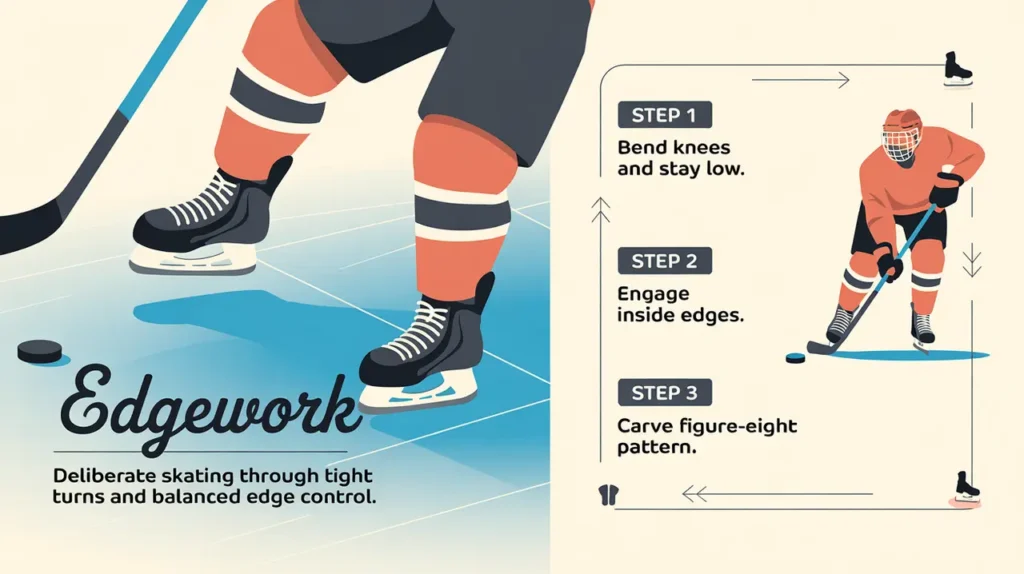
- Knee Bend and Balance: Staying low and centered allows for tight, controlled pivots.
- Edge Awareness: Clean transitions depend on rolling edges rather than hopping or losing contact with the ice.
- Eyes Up: Maintaining vision throughout prevents losing track of opponents or the puck.
How do you make good decisions with it?
- Read the Play Early: Anticipating transitions gives you time to execute cleanly.
- Choose the Right Pivot: Decide whether to transition inside-out, outside-in, or with a crossover based on your angle.
- Control Speed: Don’t rush the pivot. Smooth transitions keep you in position.
- Stay Square to the Play: Face the puck as much as possible to avoid being caught off balance.
- Blend with Other Skills: Transitions work best when paired with strong edgework and quick acceleration.
How do you master it?
Mastering transitions takes focused repetition and edge confidence. Players drill pivots slowly at first, building balance and clean mechanics before adding speed. Figure-eight patterns, partner mirroring drills, and pivot races sharpen reaction and precision. Elite players make transitions second nature through endless practice.
What does it look like when done right?
Clean transitions look fluid, fast, and controlled. The player pivots without bobbling or hopping, maintains full vision of the play, and accelerates seamlessly in the new direction.
Commentator’s Corner
Jim’s Take
When a defenseman nails a transition, it looks like they’re on a swivel chair with turbo boosters.
Parent Tip
Encourage slow, deliberate practice early. Rushing transitions before mastering balance leads to sloppy habits.
Player Tip
Stay low, trust your edges, and keep your head up. Smooth pivots beat jerky ones every time.
A Final Thought
Transitions are the hinges of hockey movement. Master them, and you’ll control direction and tempo like a pro.