Jim’s Intro to the Goal Line
Hi folks, Jim here, the only commentator who found out the hard way that skates don’t have breaks. Let’s just say might shot crossed the goal line, but unfortunately for the goalie, so did I. Honestly, I don’t think I’ll get invited to play there again.
What is the goal line?
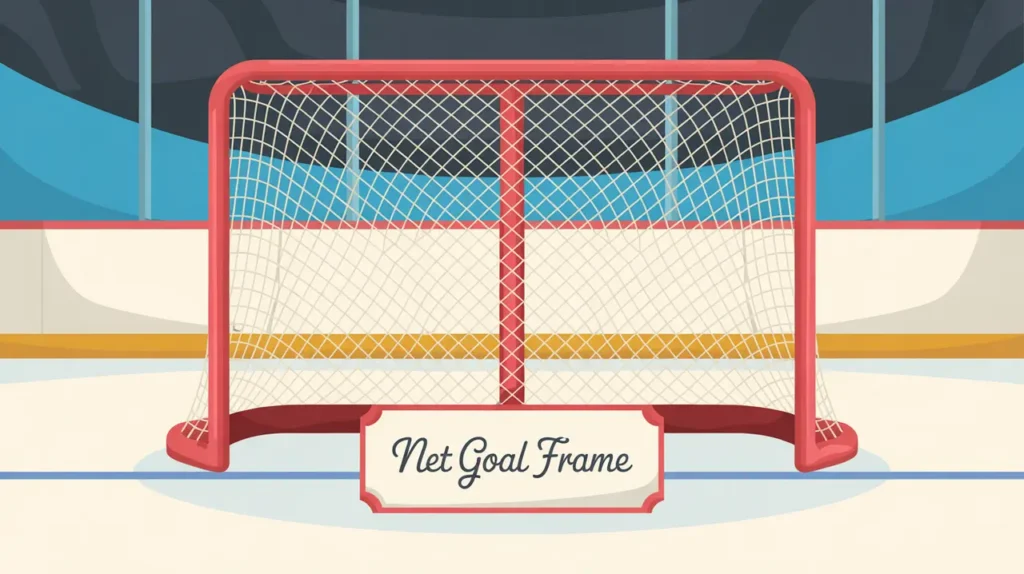
The goal line is the red line that runs across the width of the rink at each end, passing through the goal posts. It’s the ultimate decider: if the puck fully crosses this line between the posts and under the crossbar, it’s a goal. Beyond that, the goal line also plays a critical role in icing, positioning, and goalie play. Its placement shapes how teams defend the crease, set up offensive cycles, and manage the puck behind the net.
How does it work?
The goal line serves as both a scoring boundary and a strategic marker.
- Scoring: A puck must completely cross the line to count as a goal, whether it’s on the ice or in the air. The line itself is not enough; the puck has to fully clear it.
- Icing Rule: The goal line is the final checkpoint for icing calls. If the puck crosses it untouched after being shot from behind the red line, play stops for icing.
- Goalie Positioning: Goalies use the line as a reference point for depth in the crease. Playing above the line cuts angles; retreating closer helps react to rebounds and passes.
- Offensive Setups: Teams often cycle the puck below the goal line to draw defenders back, open passing lanes, and create high-danger scoring chances from behind the net.
- Wraparounds and Tips: Many scoring plays originate near or along the goal line through quick wraps, sharp-angle shots, or redirected passes.
The goal line is where precision, pressure, and timing converge.
How do you make good decisions with it?
Smart goal line decisions are about awareness and control.
- Offense:
- Keep possession below the line to stretch defenses.
- Use sharp passes or quick wraparounds to surprise goalies.
- Don’t force shots from impossible angles unless you see daylight.
- Defense:
- Seal off passing lanes below the line to prevent dangerous behind-the-net setups.
- Communicate with the goalie to pick up attackers circling near the crease.
- Goalies:
- Know where you are relative to the line at all times.
- Use it as your anchor for positioning and angle control.
How do you master it?
Mastering the goal line requires timing, positioning, and poise. Offensively, players learn to make smart decisions behind the net, reading goalie movements and passing options. Defensively, skaters and goalies develop chemistry to defend low plays without losing structure. For goalies, years of repetition refine their sense of exactly where they are relative to the line without looking down.
What does it look like when done right?
Offensive players move the puck below the goal line smoothly, forcing defenses to collapse. Smart wraparounds and quick passes create chaos in front. Defensively, goalies hug their posts, defenders protect passing lanes, and no one panics when the puck swings behind the net. The line becomes part of the team’s internal compass.
Commentator’s Corner
Jim’s Take
I’ve seen more goal-line wraparounds catch goalies napping than bad rebounds ever have. That little red stripe has ended a lot of highlight reels early.
Parent Tip
Show young players how many plays develop from below the goal line. Understanding this space builds offensive creativity and defensive awareness.
Player Tip
Practice puck control, passing, and shooting from behind and along the goal line. Being dangerous from low ice separates good players from great ones.
A Final Thought
The goal line is the game’s truth line. Goals are earned by crossing it, and strategies revolve around it. Master the space around it, and you master some of the most decisive moments in hockey.