Jim’s Intro to Shot Blocking
Hi folks, Jim here, the only commentator who once tried to block a shot in a pickup game and regretted not wearing extra padding for a week.
What is shot blocking?
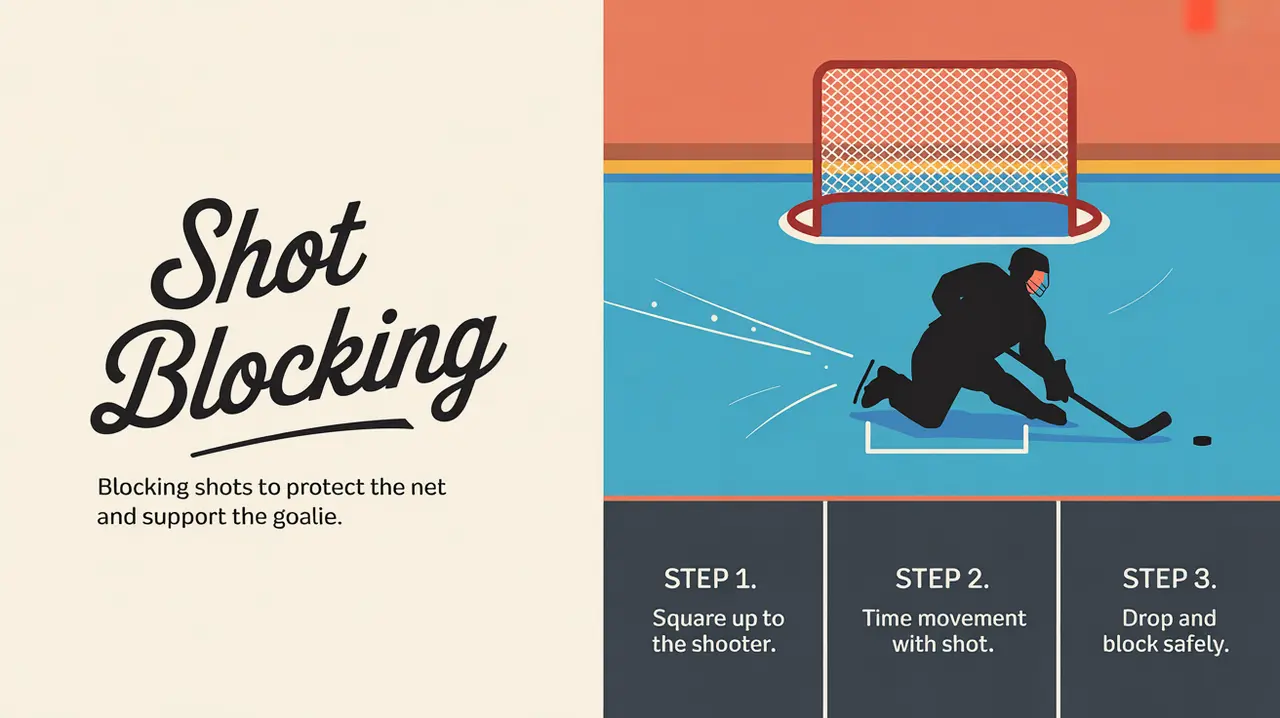
Shot blocking is the act of intentionally placing your body or stick in the shooting lane to stop or deflect an opponent’s shot before it reaches the net. It’s about positioning, courage, and smart technique, not just throwing yourself in harm’s way.
How does it work?
Shot blocking depends on timing, positioning, and body control:
- Get in the Lane: Read the shooter and step into the puck’s projected path.
- Square Up: Face the shot with a stable, low stance to maximize coverage.
- Stick Placement: Extend your stick to block low shots or deflect pucks away safely.
- Timing: Commit just as the shooter releases, not too early or you’ll get deked.
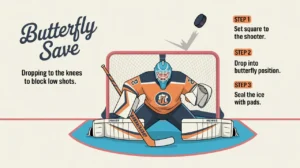
- Controlled Drop: Use one knee down for a stable, compact block on point shots.
- Protect Vulnerable Areas: Keep arms tucked and gear facing the puck to absorb impact safely.
How do you make good decisions with it?
- Know the Situation: Block shots in key moments like penalty kills or dangerous scoring chances.
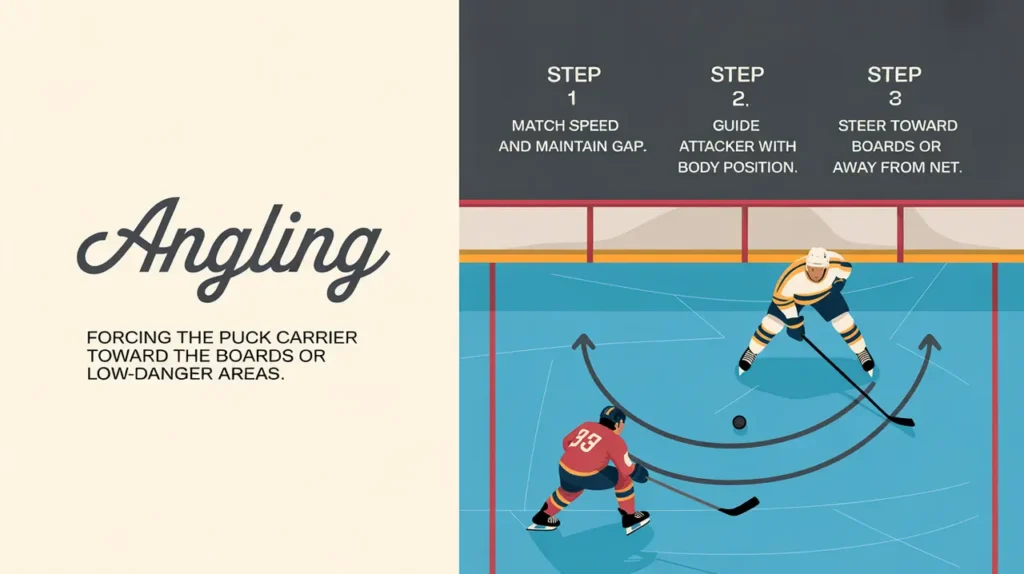
- Angle the Shooter: Guide them into predictable lanes to make blocks easier.
- Communicate with the Goalie: Don’t screen your own netminder unnecessarily.
- Pick Your Spots: Overcommitting at the wrong time can lead to screens or deflections.
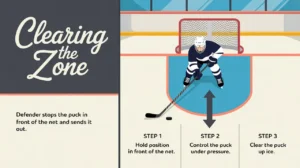
- Recover Quickly: Be ready to clear rebounds or get back into position after the block.
How do you master it?
Mastering shot blocking requires courage, repetition, and proper technique. Players practice stepping into lanes, timing drops, and using their sticks effectively in controlled drills. Learning to absorb impact safely is just as important as timing the block.
What does it look like when done right?
A great shot block looks decisive and selfless. The defender steps in, absorbs or deflects the puck cleanly, and the play breaks up without chaos in front of the net.
Commentator’s Corner
Jim’s Take
A good shot block is like throwing yourself in front of a speeding taxi to save your goalie. The bench always notices.
Parent Tip
Teach players proper technique and awareness before encouraging full-body blocks. Safety and smart positioning come first.
Player Tip
Stay square, time your drop, and trust your gear. Shot blocking is about bravery and control, not recklessness.
A Final Thought
Shot blocking is hockey’s badge of grit. Master it, and you’ll become the kind of player coaches rely on in the biggest moments.