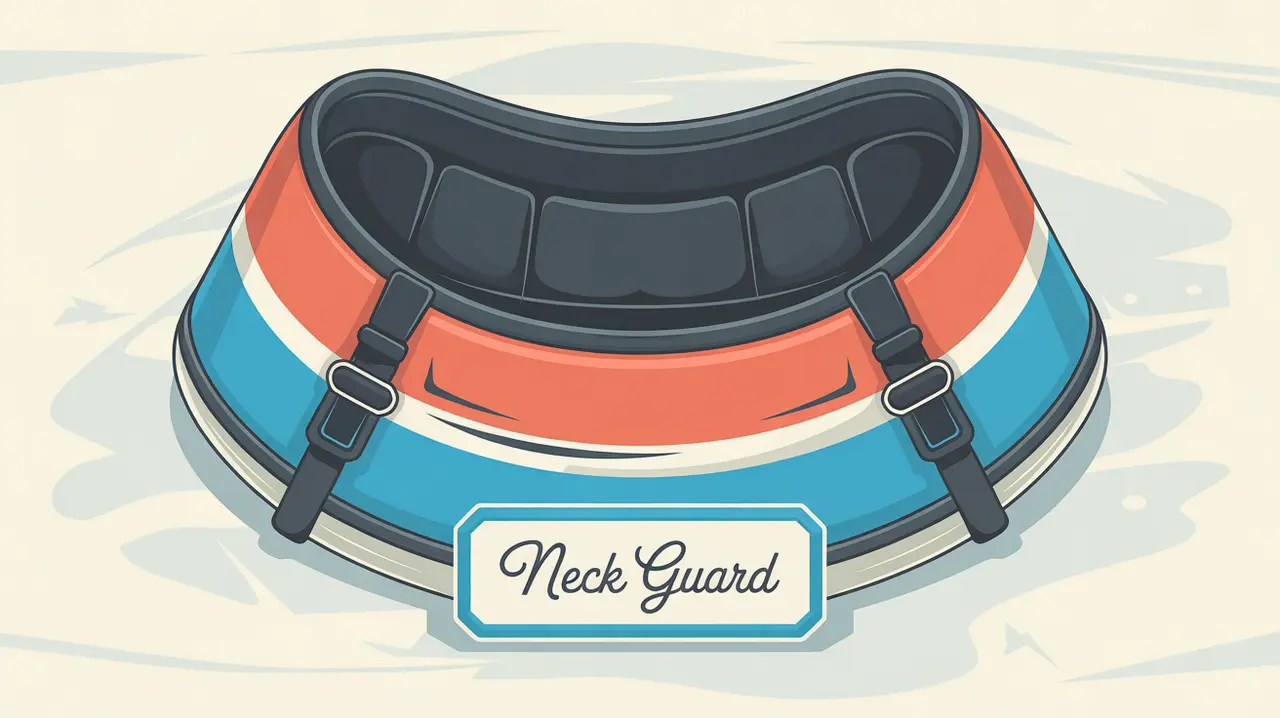
Jim’s Intro to the Neck Guard
Hi folks, Jim here, the only commentator who once tucked my neck guard too tight and spent a whole period sounding like an out-of-breath kazoo.
What is the neck guard?
The neck guard is a protective band worn around the neck to shield against skate blades, sticks, and pucks. It covers the throat and upper neck area, one of the most vulnerable parts of a player’s body. Some are soft collars with cut-resistant materials, while others include plastic inserts for added protection. A good neck guard fits snugly without restricting movement or breathing, giving players vital coverage in an area where even a minor injury can have serious consequences.
How does it work?
Neck guards are built to resist cuts and absorb light impacts.
- Cut-Resistant Fabric: High-strength materials like Kevlar or aramid fibers help prevent skate blade injuries.
- Foam or Plastic Inserts: Some models add extra padding to absorb impacts from pucks or sticks.
- Velcro or Strap Closures: Keep the guard securely in place without slipping.
- Contoured Fit: Allows full head and shoulder movement while staying tight against the skin.
When fitted properly, the neck guard stays put throughout the game without causing irritation or restricting breathing.
How do you make good decisions with it?
Choosing the right neck guard is about balancing protection, comfort, and compliance.
- Fit: Should be snug but comfortable, sitting flat against the neck.
- Coverage: Look for full wraparound protection with no exposed gaps.
- Type: Collars offer mobility and comfort. Bib-style guards extend coverage lower onto the chest.
- Certification: Check league requirements since many mandate cut-resistant models.
- Condition: Replace guards that show fraying, loose stitching, or worn Velcro.
How do you master it?
Mastery is about making the neck guard a routine part of dressing. Players learn their ideal strap tension and placement to keep it secure without feeling constricted. Over time, it becomes just another part of their gear setup; essential but unnoticed once the game begins.
What does it look like when done right?
A properly fitted neck guard stays centered and snug through every shift. Players skate, shoot, and battle without tugging or adjusting. It blends seamlessly with the rest of the gear, offering protection without distraction.
Commentator’s Corner
Jim’s Take
Neck guards help you keep your head on your shoulders. So don’t forget to wear yours at all times on the ice. like optional scarves, hanging loose and flapping around. One close call is usually all it takes to tighten things up.
Parent Tip
Prioritize fit and certified cut resistance. A well-fitted neck guard offers protection without complaints from players about comfort.
Player Tip
Get used to wearing it in practice. Once it’s part of your regular setup, you won’t even notice it on the ice.
A Final Thought
The neck guard may seem like an insignificant piece of gear, but it protects your head’s swivel muscle, your wind pipe, vocal cords, spine, and more. Get the fit right, and it does a vital job every time you stick your neck out on the ice.