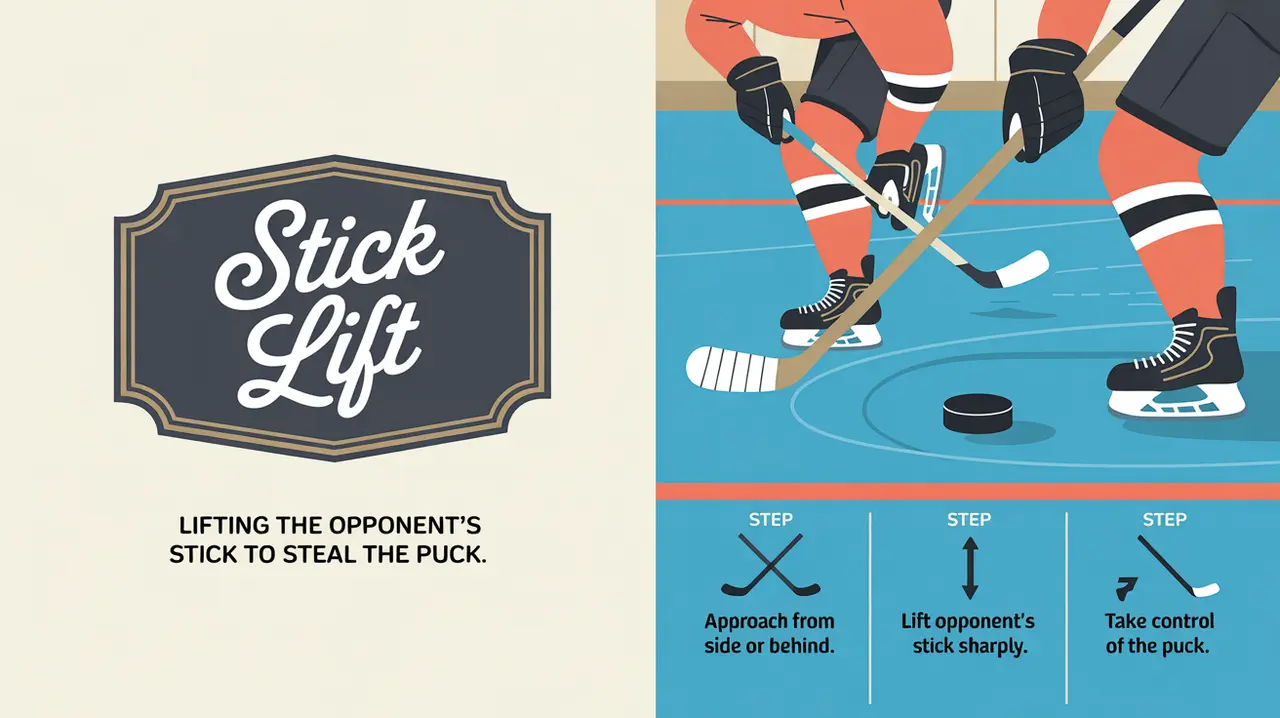
Jim’s Intro to Stick Lift
Hi folks, Jim here, the only commentator who once thought a “stick lift” was a fancy elevator for hockey sticks at a posh rink.
What is a stick lift?
A stick lift is a defensive technique where a player uses their stick to lift an opponent’s stick off the ice, usually to disrupt puck control or win possession. It’s all about timing, precision, and leverage, and when done well, it looks effortless.
How does it work?
The stick lift relies on body positioning, timing, and controlled force:
- Close Positioning: Get tight to your opponent, usually from the side or slightly behind.
- Target the Stick Blade: Slide your stick under theirs, aiming near the bottom third of the shaft.
- Quick Upward Motion: Use a controlled lift, not a wild swing, to pop their stick up.
- Simultaneous Puck Retrieval: After the lift, move your stick immediately to gain control of the puck.
- Strong Core and Balance: Stay low and stable to avoid losing position during the lift.
- No Slashing: Keep the motion clean to avoid penalties.
How do you make good decisions with it?
- Time the Lift: Aim for the moment just before the opponent makes a play with the puck.
- Read the Hands: Watch their stick blade and lower hand for cues.
- Don’t Overreach: Stick lifts work best in close, not at full extension.
- Angle Your Body: Position yourself so even if the lift fails, you can stay defensively sound.
- Use It to Create Turnovers: A clean stick lift can instantly turn defense into offense.
How do you master it?
Mastering the stick lift requires timing drills and situational practice. Players work on lifting in controlled puck battles, learning to use quick, precise motions instead of brute force. Combining lifts with immediate puck control is key.
What does it look like when done right?
A great stick lift looks smooth and sneaky. The opponent is about to make a play, their stick suddenly pops up, and you’re already heading the other way with the puck.
Commentator’s Corner
Jim’s Take
A perfect stick lift is like stealing someone’s wallet without them noticing. By the time they figure it out, you’re long gone.
Parent Tip
Teach players to focus on timing and body control, not hacking at sticks. Proper technique makes this move both effective and legal.
Player Tip
Stay close, stay low, and lift clean. The quicker you transition to puck control, the more dangerous the move becomes.
A Final Thought
The stick lift is elegant disruption. Master it, and you’ll quietly strip pucks, frustrate opponents, and create instant scoring chances out of nothing.