Jim’s Intro to Delayed Offside
Hi folks, Jim here, the only commentator who once kept yelling “clear the zone!” at the local library. I think my library suspension ends in a about two years from now.
What is delayed offside?
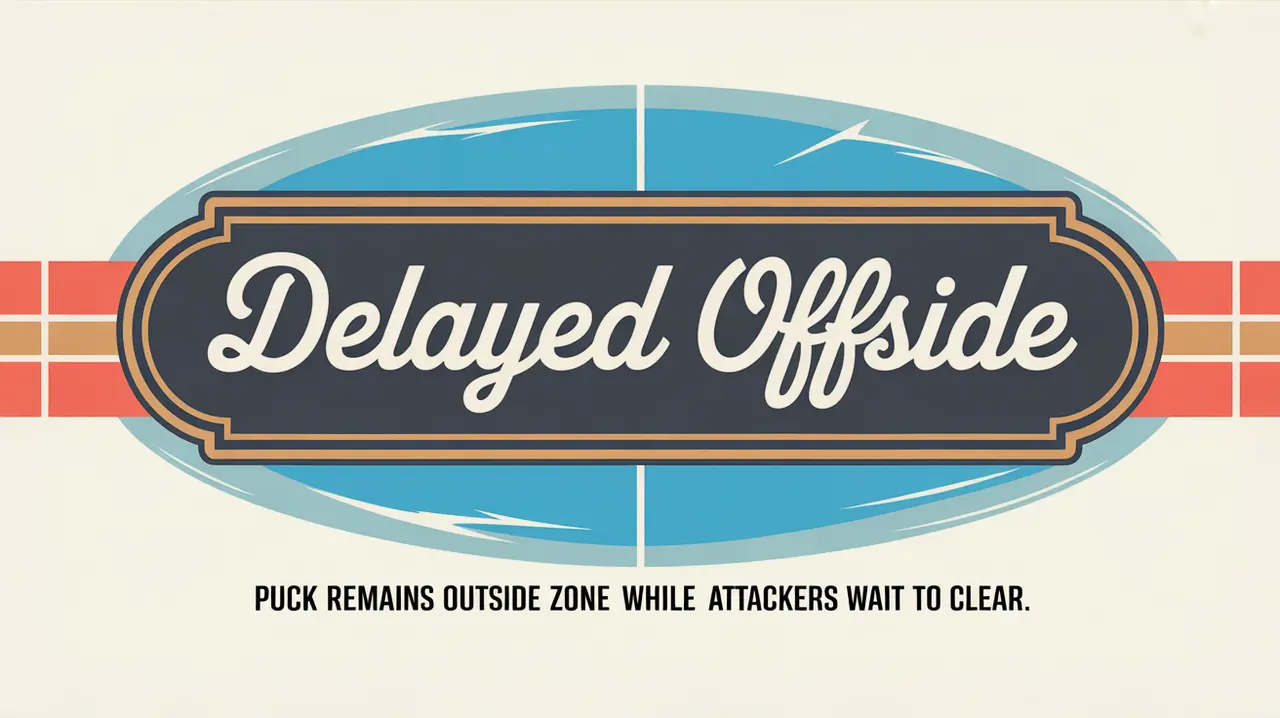
Delayed offside is a special situation that gives attacking teams a chance to reset when they enter the offensive zone early. If an attacking player crosses the blue line before the puck but the defending team gains possession or has the chance to play the puck, the linesman signals delayed offside by raising one arm. Play continues as long as the attacking players “tag up” by clearing the zone. Once all attacking skaters have exited the zone and the puck remains outside, the offside is wiped out and play resumes normally.
It’s essentially a built-in “oops, try again” rule that keeps the game flowing without unnecessary whistles.
How does it work?
Delayed offside follows a simple sequence:
- Early Entry: One or more attacking players cross the blue line before the puck.
- Linesman’s Arm Up: The official signals delayed offside. The attacking team cannot touch the puck until they clear the zone.
- Defensive Possession or Opportunity: The defending team has the puck or the ability to play it, which is why the whistle doesn’t blow immediately.
- Tag-Up: All attacking players must exit the zone completely (both skates across the blue line) and re-enter legally.
- Reset or Whistle:
- If attackers clear the zone and stay onside, the arm drops and play continues.
- If an attacking player touches the puck while still offside, play stops for an offside faceoff.
This rule rewards quick awareness and coordination, keeping the game flowing instead of stopping for minor timing errors.
How do you make good decisions with it?
Good delayed offside decisions depend on communication, timing, and discipline.
For Attackers:
- Recognize the arm signal quickly and clear the zone immediately.
- Communicate with teammates, for example, yell “tag up” to get everyone out fast.
- Avoid touching the puck until everyone is fully out.
For Puck Carriers:
- Be patient. Hold the puck in the neutral zone or regroup until the line is cleared.
For Defenders:
- Use the time to control the puck or make a breakout pass before attackers reset.
For Everyone:
- Keep heads up. A quick tag-up can turn a near-whistle into a clean re-entry.
How do you master it?
Mastering delayed offside requires instinct and team chemistry. Players learn to react instantly to the signal, exit the zone quickly, and re-time their entry with the puck. Teams that practice controlled zone entries also practice tag-ups, turning potential turnovers into regrouped attacks without losing momentum.
What does it look like when done right?
A clean delayed offside reset looks smooth. Attackers exit fast, the puck carrier pauses just long enough, and the team re-enters with control, with no whistles, no confusion, just fluid hockey. Defenders often look momentarily relieved, then suddenly pressured again as the attack restarts seamlessly.
Commentator’s Corner
Jim’s Take
I’ve seen entire rushes saved by a crisp tag-up. It’s like watching someone trip, recover mid-stride, and keep sprinting.
Parent Tip
When explaining delayed offside to players, focus on the “reset” idea. It’s not punishment; it’s a second chance if they react fast enough.
Player Tip
Train yourself to spot the linesman’s raised arm instantly. Tagging up quickly keeps possession alive and gives your team another shot at the zone.
A Final Thought
Delayed offside is hockey’s built-in do-over. React fast, reset cleanly, and your attack doesn’t have to die at the blue line.