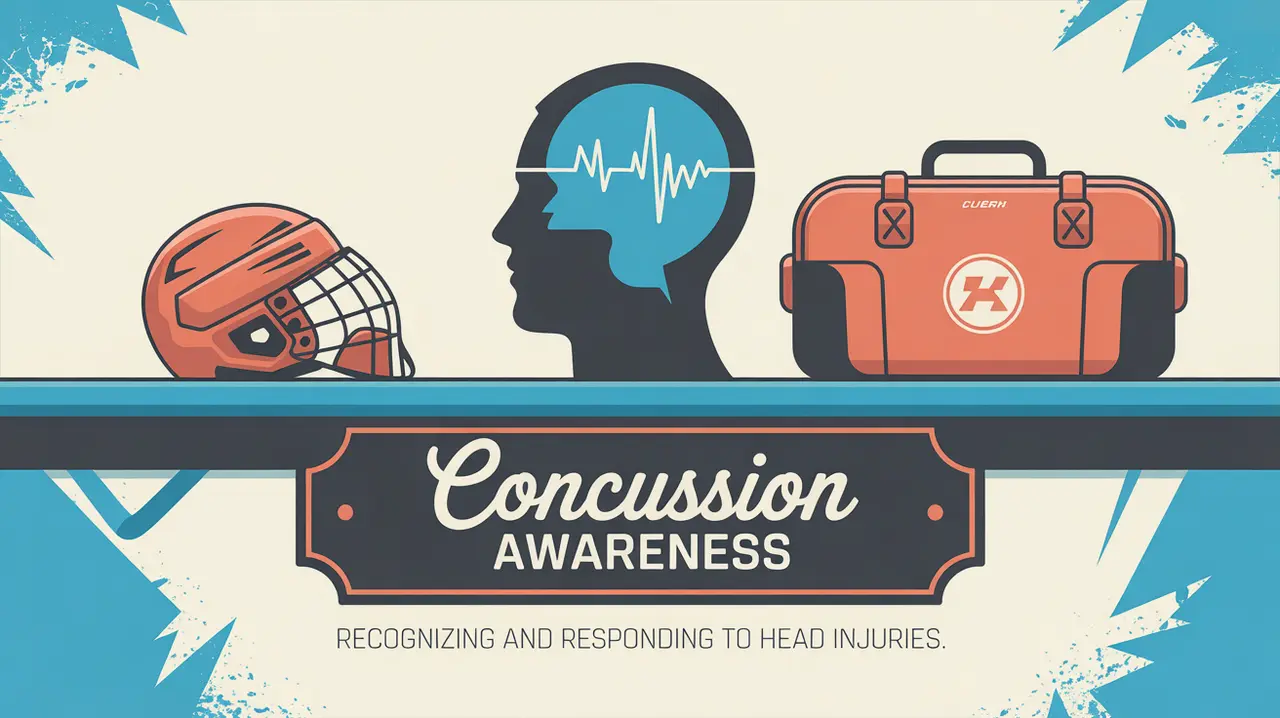
Jim’s Intro to Concussion Awareness
Hi folks, Jim here, the only commentator who once took a puck to the helmet, saw two scoreboards, and still tried to announce the penalty. I really should have gone to get checked out immediately.
What is concussion awareness?
Concussion awareness is the knowledge and recognition of how to identify, respond to, and manage concussions, which are brain injuries caused by impacts to the head or body that make the brain move rapidly inside the skull. In hockey, these can happen through collisions, checks, falls, or being struck by the puck or stick.
How does it work?
Concussion awareness works through education, vigilance, and proper protocols:
- Recognizing Symptoms: Headache, dizziness, confusion, blurred vision, nausea, and sensitivity to light or noise are common signs.
- Understanding Mechanisms: Concussions don’t always come from direct head contact; sudden jolts can be just as serious.
- Immediate Response: When a concussion is suspected, the player must be removed from play immediately and evaluated by a medical professional.
- No Same-Day Return: Players with suspected concussions do not return to the ice that day.
- Graduated Return Protocol: Recovery involves a step-by-step process under medical supervision before full clearance.
How do you make good decisions with it?
- Take Every Head Impact Seriously: Even “minor” hits can have significant effects.
- Err on the Side of Caution: When in doubt, sit out.
- Involve Medical Professionals Early: Coaches and parents shouldn’t diagnose concussions themselves.
- Track Symptoms: Keep detailed notes to guide recovery and medical decisions.
- Promote a Safety Culture: Normalize reporting symptoms and taking the time to heal.
How do you master it?
Mastering concussion awareness means making safety a non-negotiable priority. Players, coaches, parents, and officials all play a role in recognizing signs quickly and supporting a safe, complete recovery process.
What does it look like when done right?
Good concussion management looks responsible and deliberate. Suspected concussions are addressed immediately, players receive proper care, and return only when fully cleared. This protects both their health and their future in the game.
Commentator’s Corner
Jim’s Take
Concussions aren’t “getting your bell rung.” They’re brain injuries, and brains don’t play through pain.
Parent Tip
Know the symptoms and trust your instincts. If something seems off, act fast and involve medical professionals.
Player Tip
Be honest. Hiding symptoms only delays recovery and increases the risk of long-term problems.
A Final Thought
Concussion awareness protects players’ health far beyond the rink. Master it, and you help build a culture where safety and respect for the game go hand in hand.