Jim’s Intro to the Crease
Hi folks, Jim here, the only commentator who once wandered into the crease during warmups to “get a better angle” and nearly took a shot to the kneecap. Let’s talk about the crease.
What is the crease?
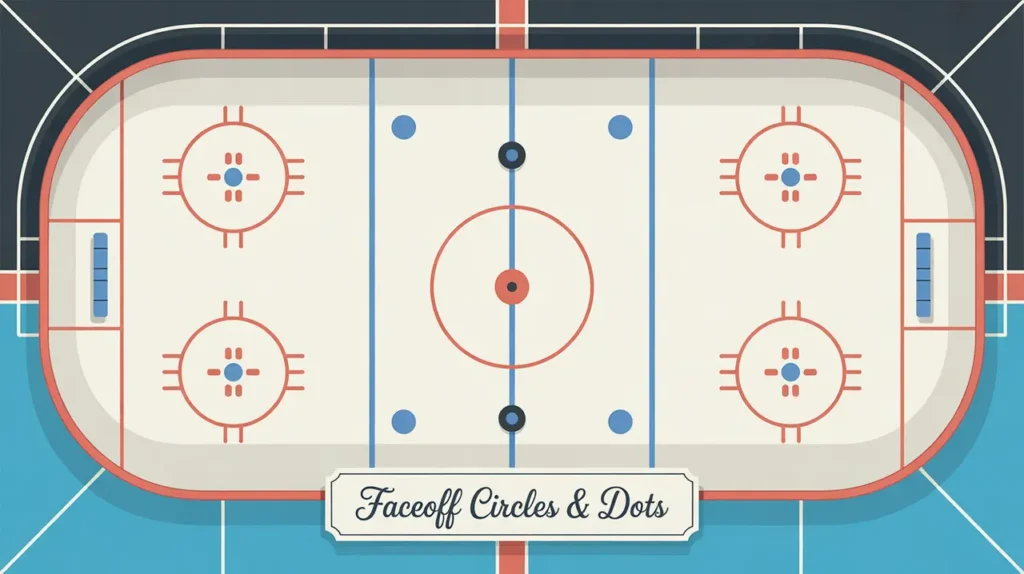
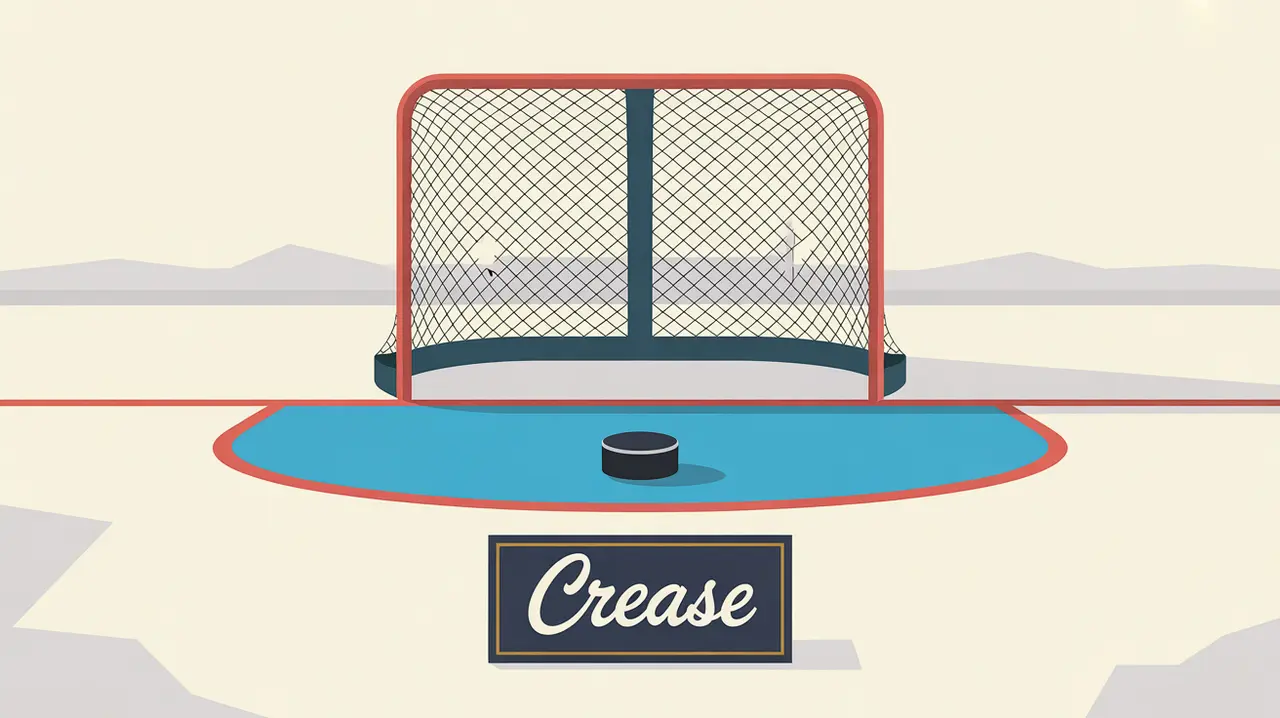
The crease is the blue semicircle in front of each goal, measuring six feet wide and four feet deep. It marks the goalie’s protected space. While players can enter the crease during play, they can’t interfere with the goalie’s ability to make a save. It’s both a physical area and a zone of special rules that govern scoring, contact, and positioning. The crease is where battles are won, goals are made or disallowed, and games can swing in a heartbeat.
How does it work?
The crease establishes goalie rights, player responsibilities, and scoring conditions.
- Goalie Protection: Opponents cannot make contact that prevents the goalie from performing their duties. Even incidental contact can lead to goals being overturned.
- Scoring Rules: A goal may be disallowed if an attacking player impedes the goalie inside the crease before the puck crosses the line.
- Positioning: Goalies use the crease to track angles, move laterally, and challenge shooters. Their depth, whether deep on the goal line or out at the top of the crease, affects both coverage and reaction time.
- Screens and Tips: Offensive players often hover just outside or at the edge of the crease to screen the goalie or redirect shots without making illegal contact.
- Rebounds and Scrambles: The crease is where loose pucks turn into high-stakes battles, with defenders clearing space and attackers digging for opportunities.
It’s a space that carries enormous weight.
How do you make good decisions with it?
Good crease decisions require awareness, discipline, and positioning.
Offense:
- Set effective screens outside or at the edge of the crease without impeding the goalie.
- Crash for rebounds legally, avoiding goaltender interference.
- Time deflections cleanly to avoid unnecessary contact.
Defense:
- Clear opposing players without drawing penalties.
- Protect your goalie from screens and tips by establishing body position early.
Goalies:
- Manage depth wisely. Challenge shooters at the top of the crease, retreat as needed for lateral movement.
- Own the crease physically to discourage crowding and chaos.
How do you master it?
Mastering the crease comes from experience and timing. Goalies develop an intuitive sense of where they are relative to the posts and top of the crease. Defenders learn how to protect space without overcommitting. Offensive players figure out how to be disruptive without being penalized. Everyone on the ice develops habits around crease battles because they happen every game.
What does it look like when done right?
When the crease is mastered, you see controlled chaos. Goalies hold their ground, defenders seal opponents early, and offensive players find smart positions to screen and tip without drawing whistles. Pucks are cleared quickly, rebounds are managed, and goalmouth scrambles don’t turn into breakdowns.
Commentator’s Corner
Jim’s Take
I’ve seen more goals wiped out by careless crease contact than bad shots. It’s a tiny patch of blue with big consequences.
Parent Tip
Teach young players to respect the crease early. Understanding what they can and can’t do there prevents penalties and teaches smarter net-front play.
Player Tip
Work on your net-front positioning. Learning how to screen, tip, and battle in the crease without interfering turns you into a real scoring threat.
A Final Thought
The crease decides huge moments. It’s where precision meets pressure, and where goalies, defenders, and attackers all stake their claim. Master this space, and you master some of hockey’s most defining battles.