Jim’s Intro to the Game Clock and Scoreboard
Hi folks, Jim here, the only commentator who once surprised a rink with a grandfather clock as a gift when their game clock was out of commission.
What is the game clock and scoreboard?
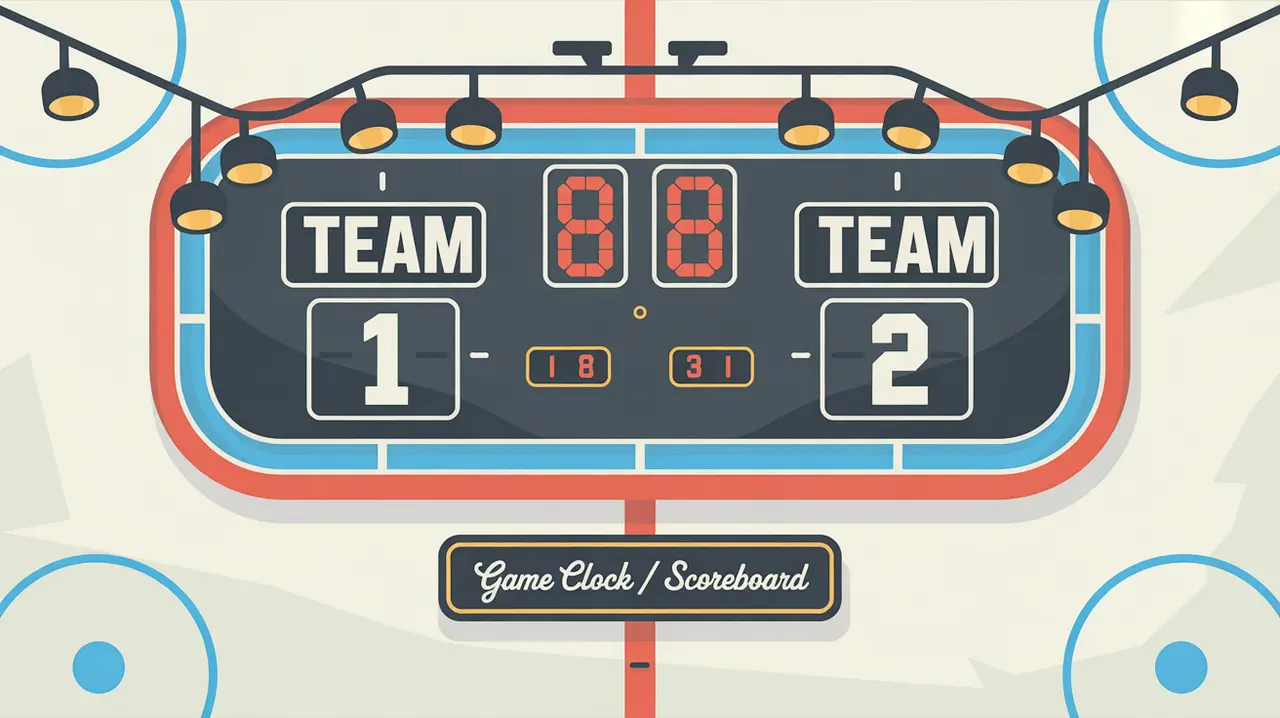
The game clock and scoreboard are the official timekeeping and score display systems used to track every moment of the game. Suspended above center ice or mounted prominently in the arena, the scoreboard shows time remaining, score, period, penalties, shots, and other key stats. The clock governs the pace of play, signaling when periods end, penalties expire, and goals officially count. It’s both the game’s metronome and its scoreboard.
How does it work?
The scoreboard integrates timekeeping, scoring, and rule enforcement in real time.
- Main Game Clock: Counts down to zero in each regulation period, pausing on stoppages.
- Score Display: Tracks goals for both teams and updates instantly after a goal is confirmed.
- Penalty Clocks: Track the time remaining on individual penalties, including power plays, double minors, and coincidental penalties.
- Period Indicator: Displays the current period (1st, 2nd, 3rd, and overtime if needed).
- Shots on Goal and Other Stats: Many modern scoreboards also track shots, power play counts, and timeouts remaining.
- Horn and Lights: The clock triggers the goal horn, end-of-period buzzer, and light signals that officials and players rely on.
The game runs to the rhythm of this clock, with every whistle, rush, and celebration tied to its steady countdown.
How do you make good decisions with it?
Good clock management is about awareness, timing, and strategy.
- End-of-Period Plays: Teams push or defend differently depending on how much time remains. Smart clock awareness can turn seconds into scoring chances.
- Penalty Kills and Power Plays: Knowing exactly when a penalty will expire helps teams time line changes and breakout plays.
- Icing and Line Changes: Late in periods, teams may chip pucks safely to kill time or push for one last entry.
- Timeouts and Reviews: Coaches may use time strategically for challenges or to set up plays when the clock is low.
- Goal Timing: Goals must beat the clock to count, making awareness in the dying seconds critical.
How do you master it?
Mastering the game clock comes from situational awareness and communication. Skilled players constantly glance at the clock during shifts, especially in special teams or tight games. Coaches drill late-game scenarios, teaching players how to manage time under pressure. Timekeepers train to operate the system precisely, as a single second can change a game.
What does it look like when done right?
Teams that master the clock control the game’s rhythm. They manage shifts efficiently, execute set plays in the final seconds, and avoid careless penalties at bad times. On the bench, everyone is synced with the clock, and on the ice, players act with purpose. Goals are scored with 0.3 seconds left, penalties are killed exactly on cue, and strategy aligns perfectly with the buzzer.
Commentator’s Corner
Jim’s Take
I’ve seen entire games swing because someone didn’t look up for two seconds. The scoreboard doesn’t lie, but it sure doesn’t wait either.
Parent Tip
Help young players build clock habits early. Encourage them to check the scoreboard during stoppages so they always know the situation.
Player Tip
Train yourself to glance at the clock instinctively. Knowing the time affects everything from shift length to shot selection.
A Final Thought
The game clock and scoreboard are hockey’s heartbeat and memory. They keep the rhythm, tell the story, and remind everyone that every second matters.