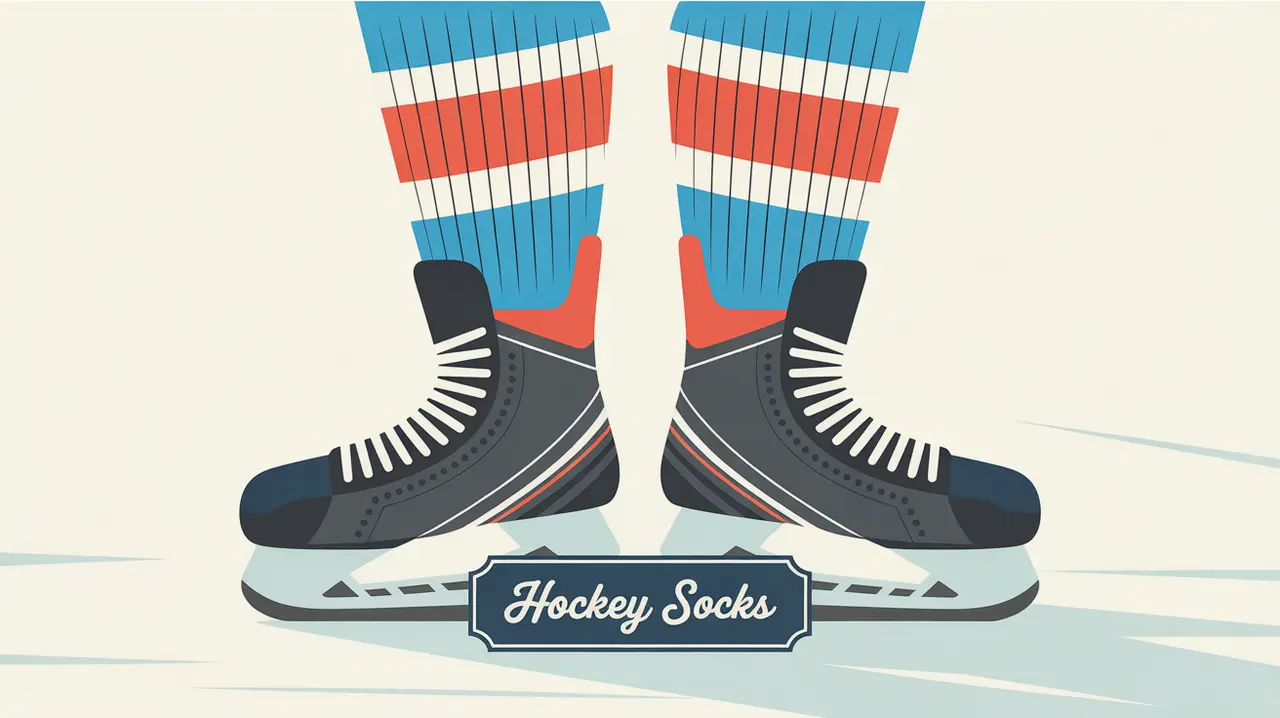
Jim’s Intro to Hockey Socks
Hi folks, Jim here, the only commentator who once was so distracted during a game that I made hand puppets with my hockey socks.
What are hockey socks?
Hockey socks are long, tube-like fabric coverings that go over shin guards, reaching from the ankle to mid-thigh. They’re not like everyday socks. They’re closer to stretchy sleeves that hold everything in place, provide a uniform look, and add a thin layer of protection against friction and wear. A good pair fits snugly over shin guards without sagging or bunching and blends cleanly with the jersey for a sharp on-ice look.
How do they work?
Hockey socks help keep shin guards stable and create a smooth outer layer for better mobility and appearance.
- Material: Usually a durable, stretch-knit polyester blend that can handle puck marks, Velcro, and regular laundering.
- Length and Fit: Cover the shin guards fully, reaching just above the knee.
- Attachment: Most players secure socks using Velcro tabs on their jock/jill shorts or with clear sock tape.
- Compression Fit: Modern performance socks may include elasticized sections to stay tight without extra tape.
When worn correctly, hockey socks hug the shin guards securely, stay in place throughout the game, and keep the lower half of the uniform clean and functional.
How do you make good decisions with them?
Choosing and wearing socks well is about fit, attachment, and durability.
- Fit: Should stretch comfortably over shin guards without being loose or restrictive.
- Attachment Method: Velcro tabs are clean and quick. Tape provides extra hold but should be applied evenly to avoid cutting circulation.
- Durability: Look for reinforced stitching to withstand Velcro pulls and contact wear.
- Team Colors: Make sure the socks match your jersey set for a cohesive look.
- Condition: Replace socks that are overly stretched out, frayed, or torn.
How do you master them?
Players master their sock setup by finding the right balance between snugness and mobility. Over time, they figure out exactly how much tape (if any) they need, how high to pull the socks, and how to line them up for comfort and consistency. For younger players, learning to attach socks properly can make gearing up faster and easier.
What does it look like when done right?
Well-fitted hockey socks look clean, tight, and symmetrical. They don’t sag, twist, or flap during play. Shin guards stay locked underneath, movement is smooth, and the uniform looks sharp from the stands.
Commentator’s Corner
Jim’s Take
I’ve seen socks sliding down like old curtains five minutes into a game. Nothing says “rookie” like constantly yanking them up between whistles.
Parent Tip
Teach players to attach socks with Velcro tabs or tape securely but comfortably. A good sock setup means less gear fuss mid-game.
Player Tip
Take an extra minute before warmups to line up your socks and secure them properly. Clean, tight socks make your gear feel locked in.
A Final Thought
Hockey socks may seem simple, but when they fit right and stay put, they keep your lower gear stable and your look sharp. They’re the finishing touch that ties the whole uniform together.