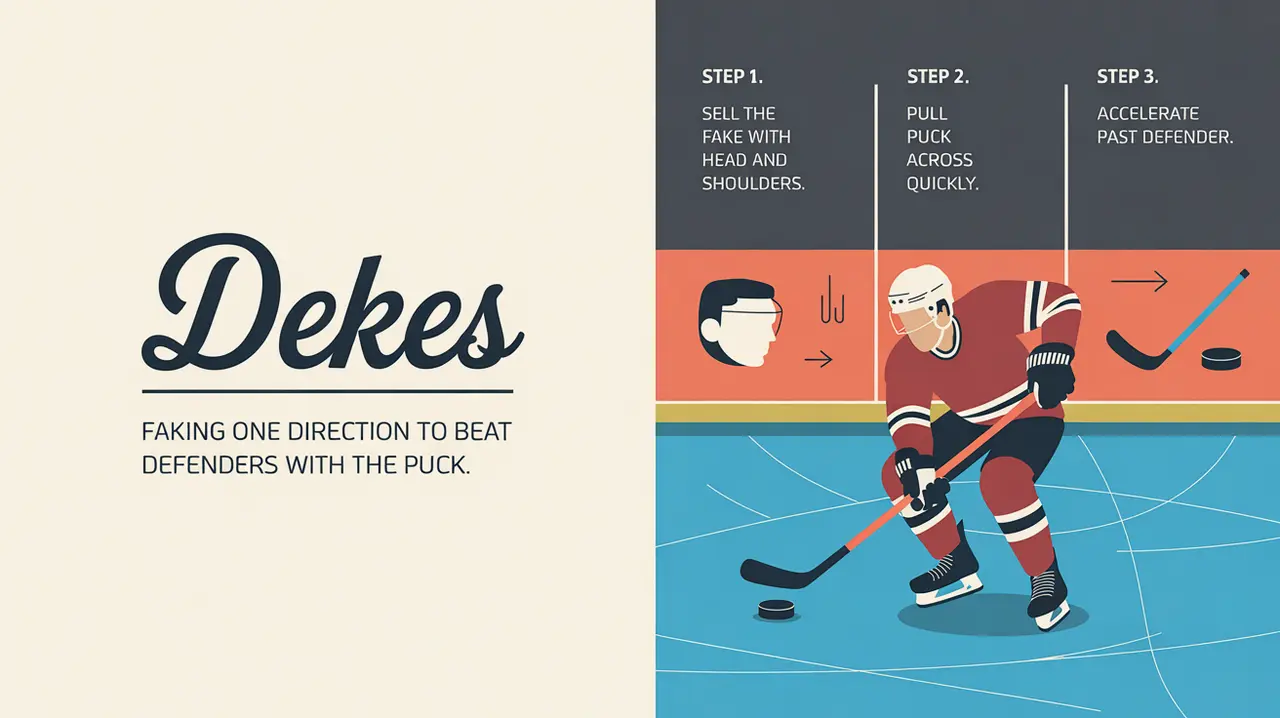
Jim’s Intro to Dekes
Hi folks, Jim here, the only commentator who once tried a deke on my nephew in the driveway and got deked right back so badly I almost forgot my own address.
What are dekes?
Dekes are fakes or feints used to fool defenders or goalies, opening up space for a pass, shot, or continued puck possession. They rely on quick hands, body movement, and timing to shift the opponent’s focus just long enough to gain the advantage.
How does it work?
Dekes combine puck control, skating, and deception:
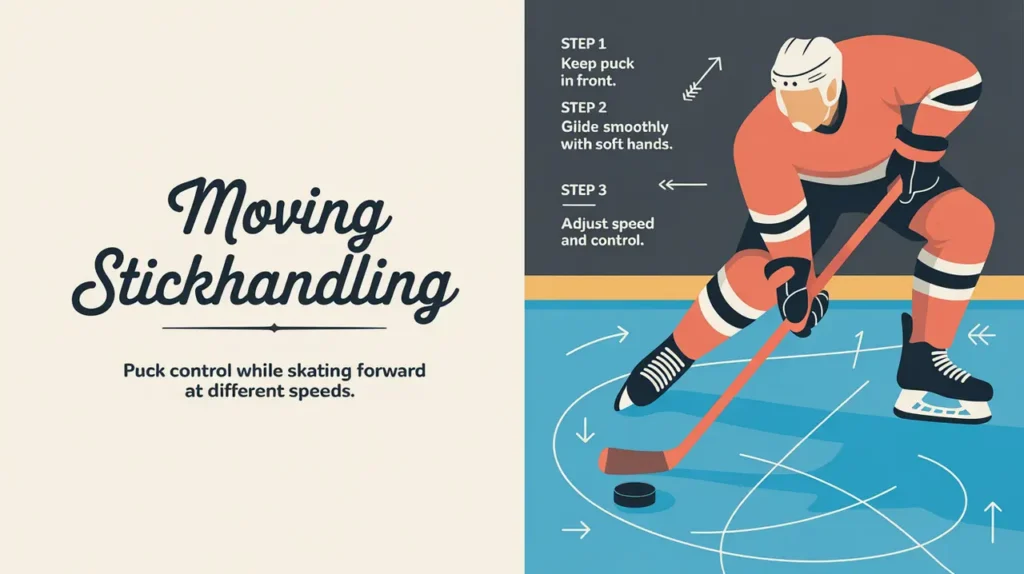
- Puck Movement: Use controlled stickhandling to shift the puck quickly from side to side.
- Body Language: Sell the fake with shoulders, head, and weight shifts.
- Edgework: Use inside and outside edges to change direction fluidly.
- Timing: Execute the fake just before the defender commits.
- Reaction Reading: Adjust based on how the defender responds to your movements.
- Follow Through: Always have a plan for what comes after the deke, to escape, pass, or shoot.
How do you make good decisions with it?
- Pick the Right Defender: Dekes are most effective when the opponent is flat-footed or reaching.
- Use Speed Wisely: Too fast and you might lose control; too slow and the defender adjusts.
- Don’t Overdo It: A single clean fake often beats a string of flashy but predictable moves.
- Know Your Space: Dekes in open ice differ from tight spaces along the boards.
- Read and React: If the defender doesn’t bite, be ready to switch tactics quickly.
How do you master it?
Mastering dekes takes puck control, timing drills, and game-like scenarios. Players practice one-on-one battles, working on quick fakes and reading reactions. Repetition builds confidence, while adding layers, like speed changes or double moves, creates unpredictability.
What does it look like when done right?
A great deke looks natural and decisive. The defender commits the wrong way, the puck carrier slides past with control, and the play opens up like a well-timed trick play.
Commentator’s Corner
Jim’s Take
A perfect deke is like a magician’s flourish. By the time the defender figures out what happened, the puck’s already in the net.
Parent Tip
Encourage players to work on simple fakes first. The fundamentals make fancy moves effective.
Player Tip
Keep your head up, stay balanced, and commit to your fake. Half-hearted dekes fool no one.
A Final Thought
Dekes turn routine plays into game-changers. Master them, and you’ll create chances out of nothing and leave defenders second-guessing every step.