Jim’s Intro to the Scorekeeper
Hi folks, Jim here, the only commentator who once tried to keep score for a youth game and accidentally credited a goal to himself. In my defense, their jerseys were the same color as my suit under the fluorescent lights.
What is a scorekeeper?
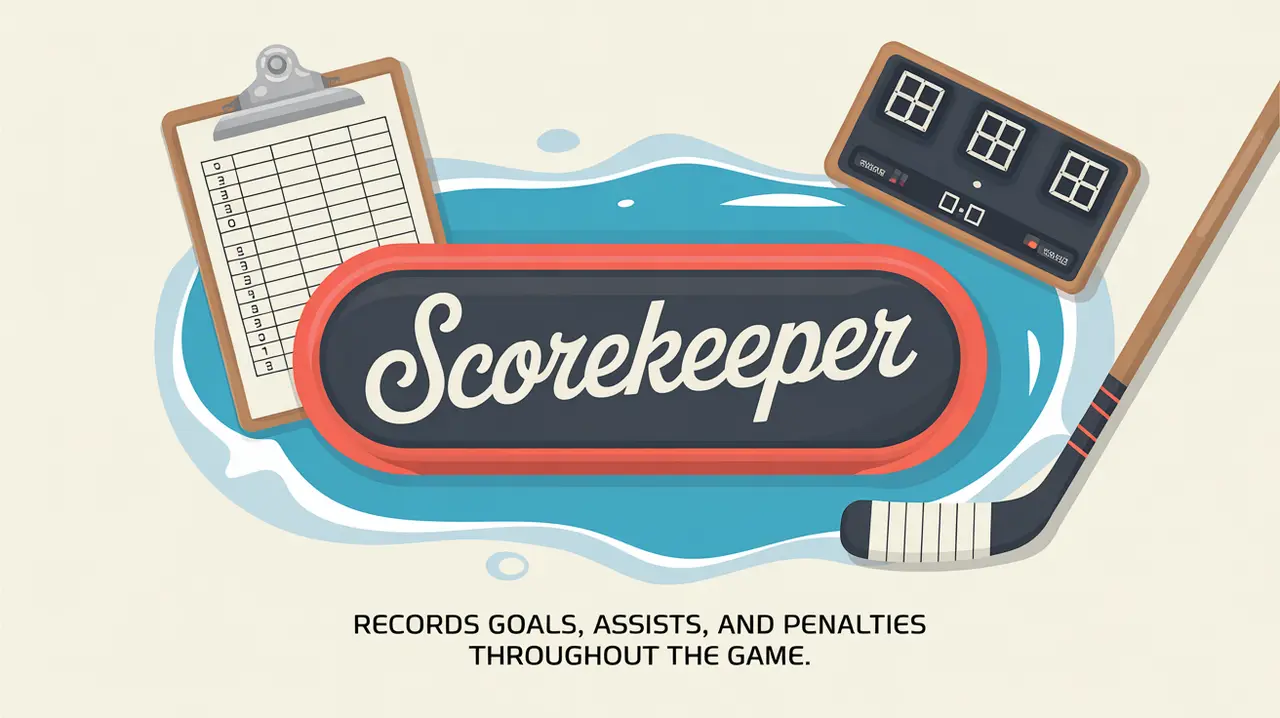
A scorekeeper is the off-ice official responsible for recording all official game statistics, including goals, assists, penalties, and time of play. They work closely with referees, linesmen, and timekeepers to maintain the official game sheet, which serves as the historical and legal record of the match.
While fans focus on the scoreboard, it’s the scorekeeper who ensures the details are accurate, from who scored and when, to who served which penalty. Their work underpins league standings, player stats, and disciplinary records.
How does it work?
Scorekeepers influence the game through organization, precision, and coordination:
Recording Goals and Assists
- When a team scores, the scorekeeper records the goal scorer, assists, and official time of the goal, as reported by the referees.
- They verify spelling, jersey numbers, and timing to keep player stats and game sheets accurate.
Tracking Penalties
- They log penalty type, player number, duration, and time assessed, working with the timekeeper to ensure penalties are displayed and served correctly.
- This includes stacking multiple penalties and differentiating between minors, majors, misconducts, and match penalties.
Maintaining the Official Game Sheet
- Scorekeepers fill out pre-game details (rosters, officials, start time), in-game records (scoring and penalties), and post-game confirmations, ensuring everything is complete for league submission.
Communicating with Officials
- They check details with referees after each stoppage involving a goal or penalty, clarifying numbers, times, or assists to avoid errors.
- If discrepancies arise, they alert officials quickly to correct them.
Updating the Scoreboard
- In some rinks, scorekeepers also control the visible score and penalties, while in others they coordinate with the timekeeper.
- Their work ensures fans, players, and coaches see accurate information in real time.
Common Situations Involving Scorekeepers
- Goal Announcements: Recording and relaying scorer, assists, and time to PA announcers.
- Penalty Logging: Tracking multiple penalties simultaneously for both teams.
- Late Corrections: Adjusting assists or numbers after conferring with officials.
- Post-Game Reporting: Submitting finalized sheets to leagues or tournament officials.
- Handling Disputes: Resolving disagreements about recorded stats with clear records.
How do you make good decisions with it?
Great scorekeepers rely on concentration, accuracy, and clear communication.
- Listen First, Write Second: Get information directly from referees before logging.
- Double-Check Everything: Numbers, times, and penalty types need to be correct. Little errors snowball fast.
- Stay Neutral: Treat both teams equally, no matter the atmosphere.
- Keep the Sheet Organized: A clean, legible game sheet makes corrections easier.
- Clarify Early: If something’s unclear, ask the officials immediately, not at the end of the game.
How do you master it?
Mastering the scorekeeper role takes strong attention to detail, familiarity with rules, and efficient note-taking. Scorekeepers train to record quickly under pressure, especially during high-scoring or penalty-heavy games. Experience helps them anticipate the flow of information so they’re ready the moment a whistle blows.
What does it look like when done right?
A great scorekeeper logs goals and penalties seamlessly, keeps the game sheet spotless, and works in sync with the timekeeper and officials. When the final buzzer sounds, their sheet is a perfect mirror of what happened on the ice, no frantic corrections, no missing details. League officials and stat keepers trust it completely.
Commentator’s Corner
Jim’s Take
Scorekeepers are like court reporters. The players write the story, but the scorekeeper makes sure history gets it right.
Parent Tip
If your player wants to get involved behind the scenes, scorekeeping builds focus, rule knowledge, and responsibility. It’s a great way to contribute to the game without wearing skates.
Player Tip
Make your numbers and signals clear when scoring or taking penalties. A confused scorekeeper can turn your hat trick into a mystery goal.
A Final Thought
Scorekeepers are the archivists of the rink, turning split-second action into permanent record. When mastered, the role blends accuracy, organization, and clear communication, preserving the integrity of every game played.