Jim’s Intro to Special Teams Units
Hi folks, Jim here, the only commentator who once thought “Special Team Units” was a Law & Order spinoff.
What are special teams units?
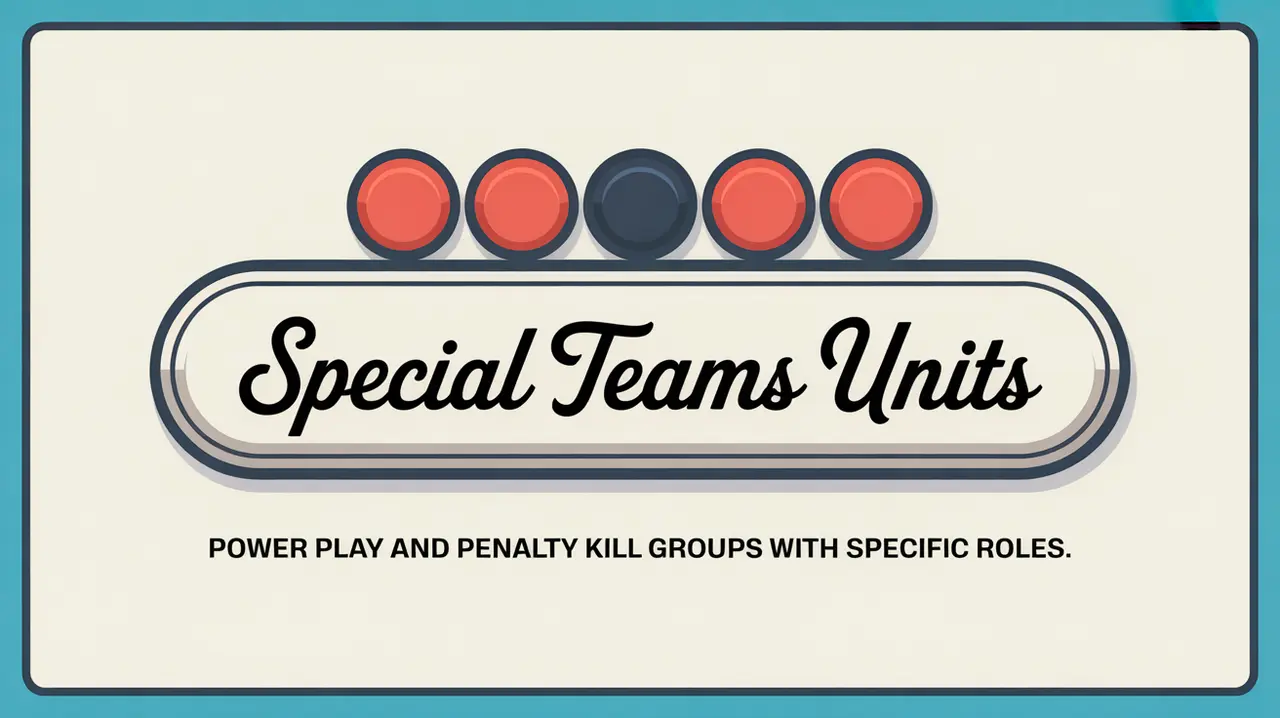
Special teams units are the groups that play during man-advantage or man-disadvantage situations, mainly on the power play or penalty kill. These units are built with specific skills, responsibilities, and structures that differ from regular five-on-five play. Success here often decides games.
How do they work?
Special teams units rely on specialization and execution:
- Power Play Units: Usually feature four forwards and one defenseman or three forwards and two defensemen. Their goal is to move the puck quickly, create high-quality chances, and capitalize on the numerical advantage.
- Penalty Kill Units: Usually two forwards and two defensemen focused on structure, discipline, and clearing the puck to burn time.
- Role Players: Power plays rely on shooters, playmakers, net-front presences, and point quarterbacks. Penalty kills rely on skaters who can block shots, anticipate plays, and disrupt passing lanes.
- Set Formations: Teams use systems like 1 3 1 on the power play or box/diamond structures on the penalty kill.
- Tactical Adjustments: Special teams are often fine-tuned game to game based on opponent tendencies.
How do you make good decisions with them?
- Put the Right Players in the Right Spots: Specialty skills shine in these moments.
- Read the Opponent: Adjust structure to counter power play setups or PK aggression.
- Manage Time Wisely: Don’t overextend shifts; fatigue kills execution.
- Emphasize Discipline: Especially on the penalty kill, staying in structure is everything.
- Communicate Constantly: Both units require tight, coordinated movement.
How do you master them?
Mastering special teams takes dedicated practice, film study, and repetition. Teams drill formations, puck movement, and situational reads to execute under pressure. Individual players develop niche skills that make them valuable specialists.
What does it look like when done right?
Elite special teams look crisp and purposeful. Power plays zip the puck around with confidence, breaking down defensive boxes. Penalty kills anticipate, pressure, and clear with precision, frustrating opponents and flipping momentum.
Commentator’s Corner
Jim’s Take
Good special teams are like having a secret weapon. One clinical power play or a gutsy penalty kill can tilt the ice for the rest of the game.
Parent Tip
Special teams highlight hockey IQ. Encourage players to study and understand why formations work, not just where to stand.
Player Tip
Find your role. Whether you’re the net-front grinder or the PK shot-blocker, mastering your specialty can keep you on the ice in big moments.
A Final Thought
Special teams are where details decide games. Master them, and your team will own the key moments that swing momentum and shape outcomes.