Jim’s Intro to Strength Training
Hi folks, Jim here, the only commentator who once tried to impress the team in the weight room. It all fell apart when I got offended after a seemingly helpful player suggested, “Try those dumbbells.” I looked him straight in the eye and said, in my most serious tone, “Young man, don’t call me Dumb Bells. My name is Jim.”
What is strength training?
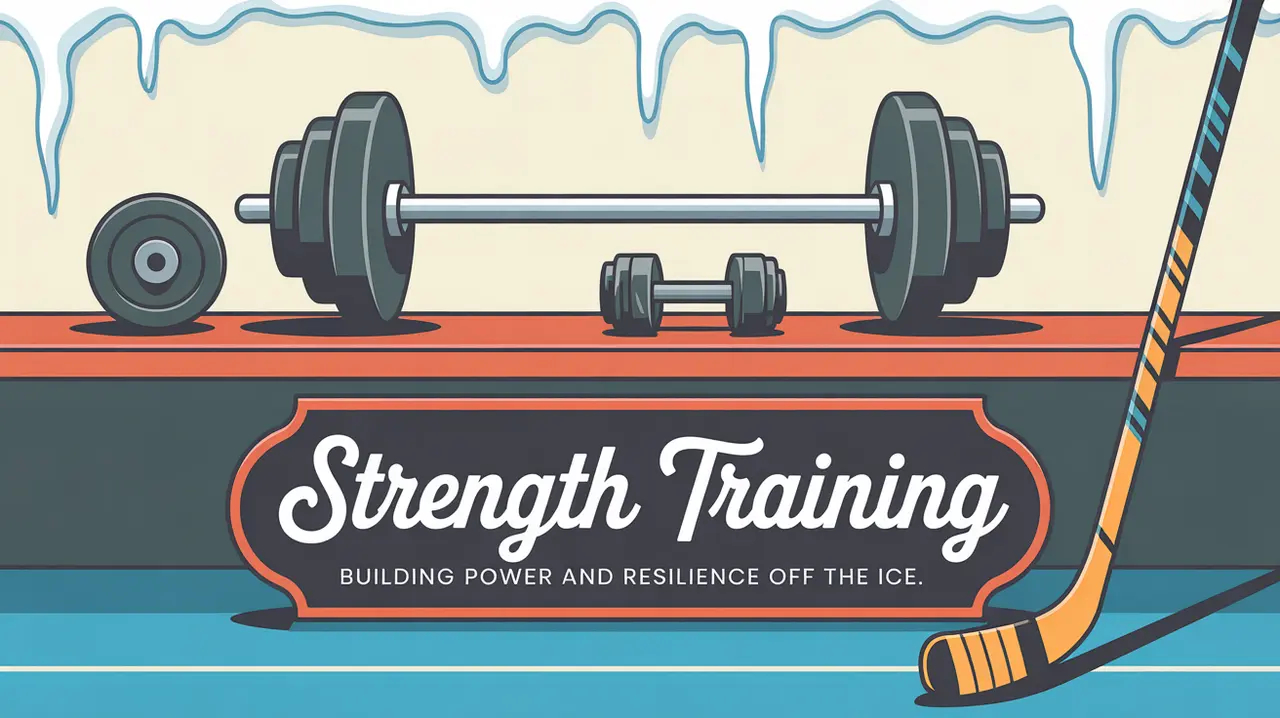
Strength training is the systematic use of resistance exercises to build muscle strength, power, and durability. In hockey, it supports speed, stability, shot power, injury prevention, and overall performance on the ice.
How does it work?
Strength training works by gradually challenging the body to adapt and grow stronger:
- Progressive Overload: Increasing resistance over time stimulates muscle growth and resilience.
- Targeted Muscle Groups: Core, legs, hips, and upper body are emphasized for skating power, balance, and shooting.
- Functional Movements: Exercises mimic hockey actions like strides, checks, and transitions.
- Recovery Periods: Muscles grow during rest, making balance between work and recovery essential.
- Age-Appropriate Training: Programs are tailored to developmental stages to build safely and effectively.
How do you make good decisions with it?
- Focus on Technique First: Proper form matters more than heavy weights.
- Match Training to Season: Off-season builds strength, in-season maintains it.
- Include Full-Body Work: Don’t neglect stabilizers and mobility in pursuit of raw power.
- Avoid Overtraining: Quality beats quantity, especially during busy game schedules.
- Work with Professionals: Strength coaches help design programs that fit age, position, and goals.
How do you master it?
Mastering strength training means committing to consistent, well-structured programs. Over time, players develop explosive power, better balance, and more resilience against injuries.
What does it look like when done right?
Good strength training looks efficient and purposeful. Players move with power, skate stronger through contact, and maintain their edge deep into the season.
Commentator’s Corner
Jim’s Take
Strength training is like sharpening your shot. The more consistently you work at it, the more dangerous you become on the ice.
Parent Tip
Support age-appropriate strength programs led by knowledgeable coaches. Avoid pushing heavy weights too early.
Player Tip
Commit to the process. Strength gains come steadily through discipline, not shortcuts.
A Final Thought
Strength training is a cornerstone of hockey performance. Master it, and you’ll skate faster, shoot harder, and stay stronger through every shift.